
Breast Cancer
Studies Find Breast Cancer Risk Lowers with Increasing Lifetime Sun Exposure
Women with long-term UV exposure found to have a lower risk of breast cancer, especially with diagnosis in older age Key Points One study found

Women with long-term UV exposure found to have a lower risk of breast cancer, especially with diagnosis in older age Key Points One study found

Is breast cancer awareness saving lives? Achieving targeted vitamin D levels is projected to far outweigh the benefits of early detection. With October focused on

A secondary analysis of the VITAL trial results found a 38% decreased risk of metastatic cancer among participants with a normal BMI who supplemented with

Video Friday: What is the cost (in money, time, and stress) of ignoring the importance of vitamin D and other nutrients for our health and

Study shows that women with the highest vitamin D level at breast cancer diagnosis had a better chance of survival Vitamin D has known anticancer

Plus: Such a Fun Read, We HAD to Share! Celebrate bringing awareness to breast cancer prevention and healing this month, with GrassrootsHealth. This October, as

Do you have a breast cancer story to share? See below for how to share your story through GrassrootsHealth. How Carole’s Breast Cancer Experience Sparked
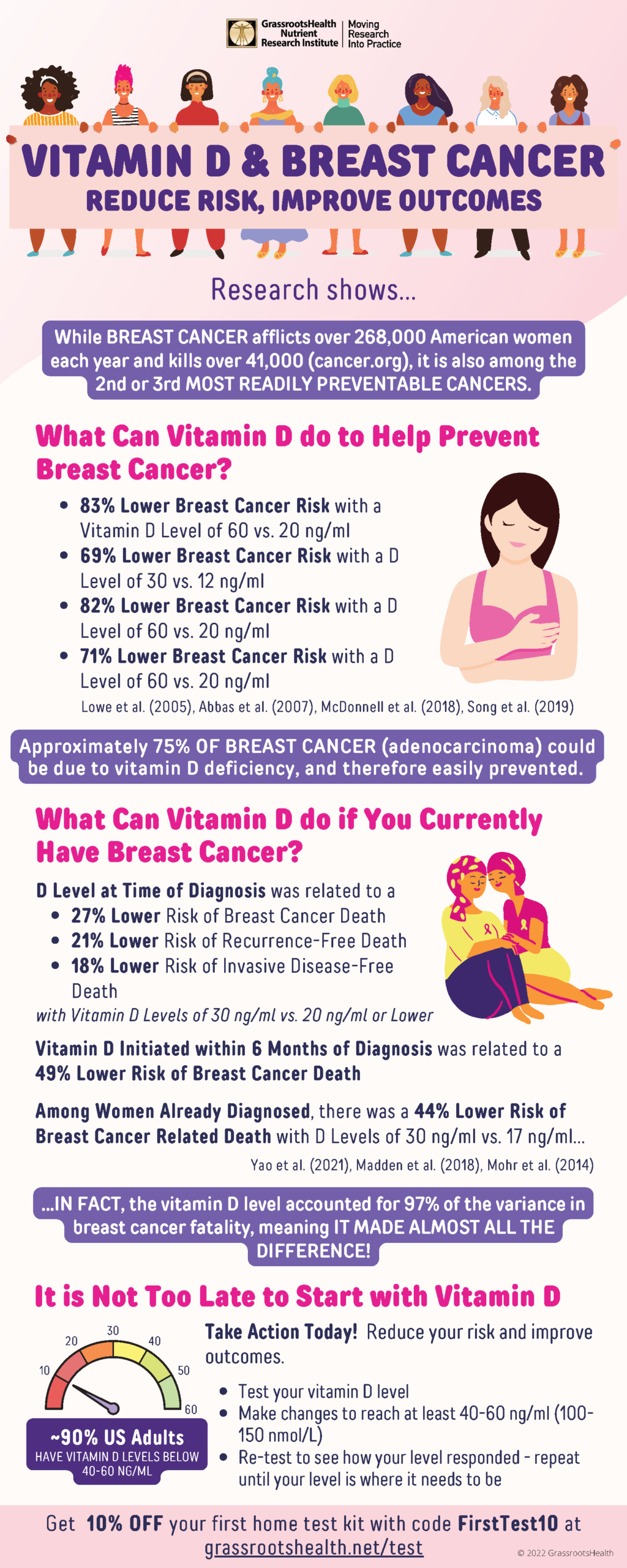
World Breast Cancer Research Day is August 18th – What impact can be made for breast cancer incidence and survival, for you and your loved

The repeated pattern in these charts clearly shows the association between latitude, UVB irradiance from the sun, and rates of many cancers and type 1
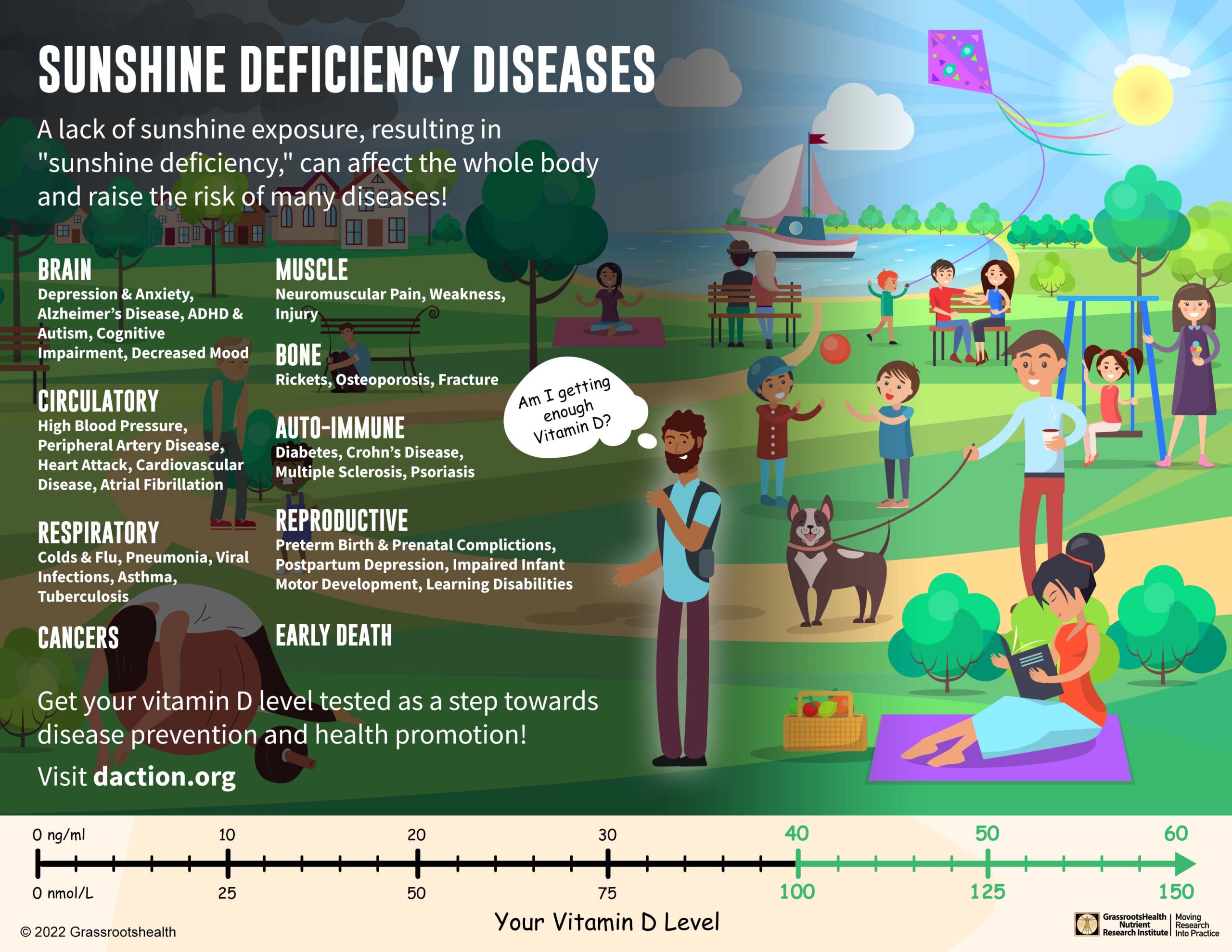
Sunshine has many benefits for human health, and a lack of sunshine exposure can lead to increased risk of many diseases Key Points 340,000 deaths

A review of the strongest evidence available identifies differing optimal vitamin D levels needed to help prevent diseases known as major causes of death Key

Implementing vitamin D screening and targeting a level of at least 40-60 ng/ml (100-150 nmol/L) projected to far outweigh benefits of early detection Key Points