A new analysis of four supplementation trials found that increasing the Omega-3 Index with EPA and DHA was associated with a reduction in a marker of systemic inflammation.
Key Points
- EPA+DHA supplementation significantly increased the Omega-3 Index while decreasing NLR, a marker of systemic inflammation.
- As the Omega-3 Index increased, NLR tended to decrease, adding to evidence linking higher omega-3 status with healthier inflammatory balance.
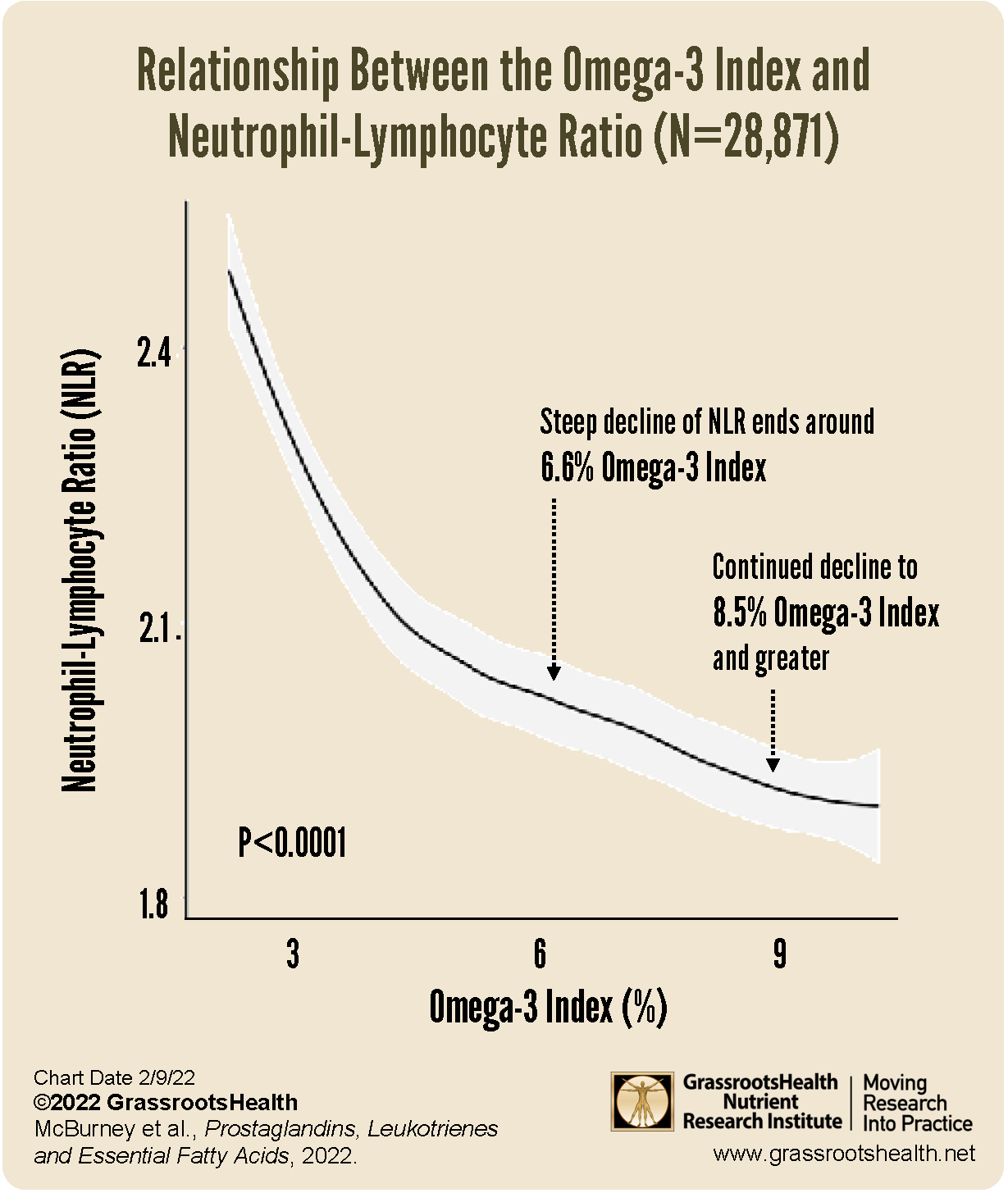
- Earlier research involving nearly 29,000 adults found the steepest decrease in NLR as the Omega-3 Index increased to approximately 6.6%, with additional decreases as levels approached 8.5% and above.
- Individual response to omega-3 intake varies, making Omega-3 Index testing the best way to know your actual omega-3 status and track how it changes.
Measure Your Omega-3 Levels with Vitamin D – Save 15% with Code Omega3s

Previous research has highlighted the important relationship between omega-3 status and inflammation, including findings that higher Omega-3 Index levels are associated with lower levels of inflammatory markers and that EPA and DHA help regulate and resolve the body’s inflammatory response. A new study published by McBurney et al. provides additional evidence for this connection and highlights why measuring your Omega-3 Index is especially important when there are concerns of chronic inflammation.
The researchers combined individual participant data from four omega-3 supplementation trials to investigate whether increasing blood levels of the long-chain omega-3 fatty acids EPA and DHA would affect markers associated with systemic inflammation. Their findings showed that EPA+DHA supplementation significantly increased the Omega-3 Index while decreasing the neutrophil-to-lymphocyte ratio (NLR), a marker of systemic inflammation.
Omega-3 Supplementation Increased the Omega-3 Index and Reduced NLR
The new analysis included 436 healthy adults from three randomized placebo-controlled trials and one omega-3 supplementation trial. Participants receiving EPA+DHA consumed an average of approximately 1,160 mg per day. Among those receiving EPA+DHA, the Omega-3 Index increased by an average of 3.28 percentage points. At the same time, NLR decreased significantly compared to the control group.
The researchers also found an inverse relationship between changes in the two markers: as the Omega-3 Index increased, NLR tended to decrease.
This finding is especially interesting because NLR provides information about the balance between two important types of immune cells – neutrophils and lymphocytes – and elevated NLR has been associated with systemic inflammation and an increased risk of multiple chronic diseases and mortality.
New Findings Build on Earlier Research
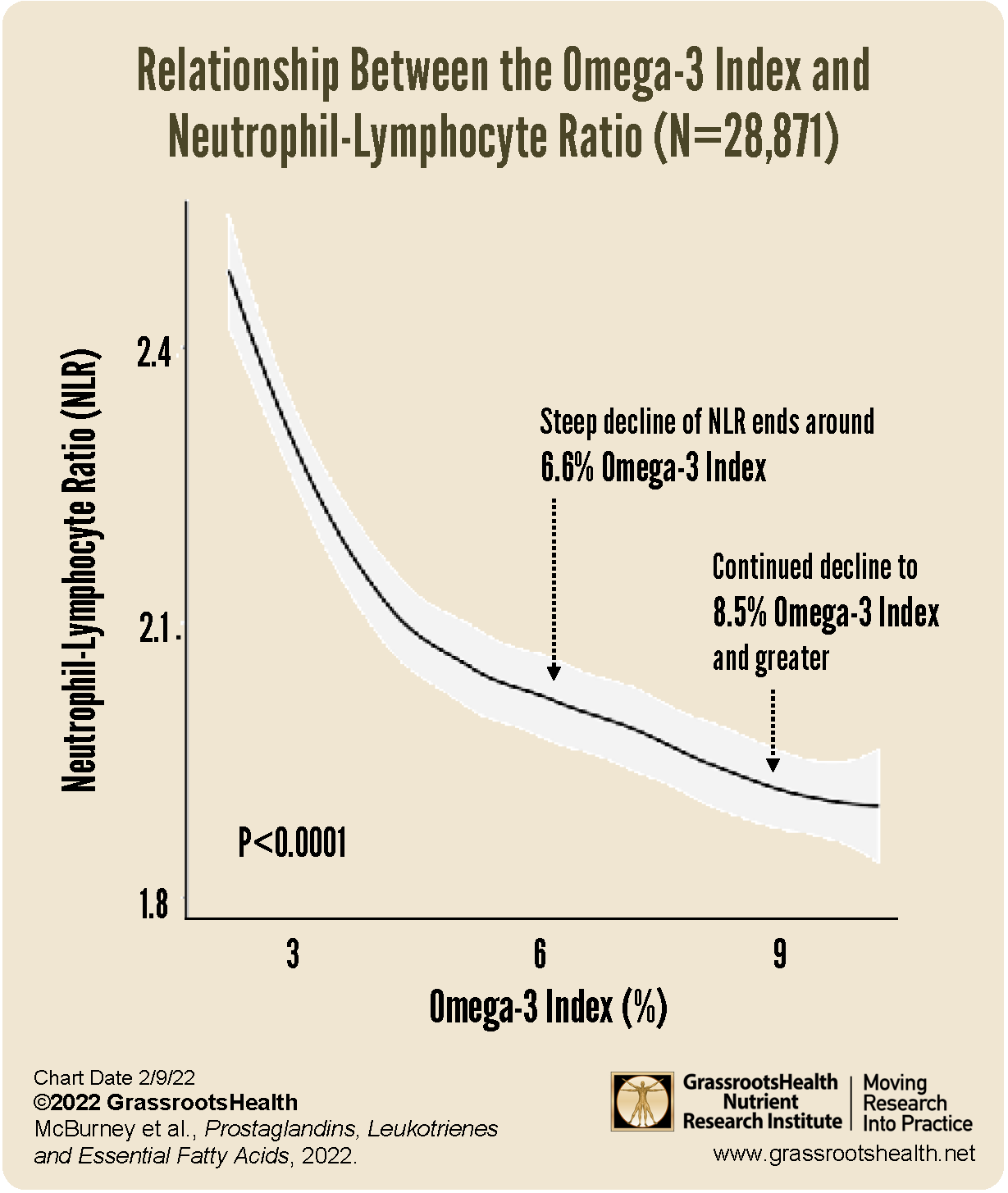
This new study builds on previous research involving nearly 29,000 adults, which also found a significant inverse relationship between the Omega-3 Index and NLR. The earlier study by McBurney et al. found that NLR decreased most steeply as the Omega-3 Index increased up to approximately 6.6%, with additional decreases observed as the Omega-3 Index approached 8.5% and above.
How Might Omega-3s Help Regulate Inflammation?
EPA and DHA are incorporated into cell membranes throughout the body, including immune cells. They can influence the production of molecules involved in both initiating and resolving inflammation. EPA and DHA also serve as precursors for specialized pro-resolving mediators, including resolvins, protectins, and maresins, that help the body bring an inflammatory response to an appropriate end. This is an important distinction, as inflammation itself is a normal and necessary part of immune function. Problems arise when inflammatory responses remain chronically elevated or fail to resolve appropriately.
The new findings add strength to the evidence that omega-3 status may be one factor influencing this inflammatory balance.
What Is the Omega-3 Index?
The Omega-3 Index measures the amount of the long-chain omega-3 fatty acids EPA and DHA found in red blood cell membranes. Because red blood cells circulate for several months, the Omega-3 Index provides a useful measure of longer-term omega-3 status rather than simply reflecting what someone ate or supplemented with recently.
Diet, supplement dose, absorption, metabolism, genetics, and other individual factors can all influence the Omega-3 Index that a person ultimately achieves. The only way to know your Omega-3 Index is to measure it. GrassrootsHealth offers an at-home Omega-3 Index test that measures EPA and DHA in your red blood cells, making it easy to know and track your omega-3 status.
Know your Omega-3 Index. Test, take action, and retest to see how your level responds.
Measure Your Omega-3 Index – Save 15% with Code Omega3s

Measure Your Vitamin D and Other Important Nutrients – Get 15% Off when Including Omega-3s with Code OMEGA3S
If you haven’t had your vitamin D levels checked recently, now is the time! With so many Americans still falling short, awareness is the first step toward change.

Measuring and calculating a supplementation amount to help reach and maintain a target level, or taking loading doses to correct deficiency faster, could possibly make all the difference in overall health, wellbeing, and how a current disease situation progresses. Test your level now!
Create your custom home blood spot kit by adding any of the following measurements, along with your vitamin D:
- Omega-3 Index (with or without Ratios AA:EPA and Omega-6:Omega-3)
- Magnesium (with additional Elements copper, zinc, selenium, mercury, and cadmium)
- hsCRP as a marker of inflammation and HbA1c as a marker of blood sugar health
Having and maintaining healthy vitamin D levels and other nutrient levels can help improve your health, now and for the future. Enroll and test your levels today, learn what steps to take to improve your status of vitamin D (see below) and other nutrients and blood markers, and take action! By enrolling in the GrassrootsHealth projects, you are not only contributing valuable information to everyone, you are also gaining knowledge about how you could improve your own health through measuring and tracking your nutrient status, and educating yourself on how to improve it.