A new study found that higher vitamin D levels were associated with lower odds of metabolic dysfunction-associated steatotic liver disease, even after accounting for several metabolic risk factors.
Key Points
- Higher vitamin D levels were associated with lower odds of fatty liver disease (MASLD), even after accounting for major metabolic risk factors.
- For every 4 ng/mL (10 nmol/L) increase in 25(OH)D, the odds of fatty liver were approximately 7% lower after adjustment for BMI, triglycerides, HDL cholesterol, fasting glucose, uric acid, age, and sex.
- Only 37.6% of the vitamin D – fatty liver relationship was explained by the metabolic factors studied, leaving more than 60% unexplained by those factors.
- Previous clinical trial research also found that vitamin D supplementation significantly improved liver enzymes ALT and AST, adding to evidence of an important relationship between vitamin D status and liver health.
Metabolic dysfunction-associated steatotic liver disease, or MASLD, is a condition in which excess fat accumulates in the liver along with one or more metabolic risk factors. Previously known as non-alcoholic fatty liver disease (NAFLD), MASLD has become the most common chronic liver disease worldwide, affecting roughly 30% of adults.
Could Vitamin D be Related to Liver Health?
The liver converts much of the vitamin D3 in the blood into 25(OH)D, leading some researchers to speculate that liver disease or poor liver function may contribute to low 25(OH)D levels or a poor response to supplementation. However, the relationship may go both ways, as low vitamin D levels may also negatively affect liver function and health.
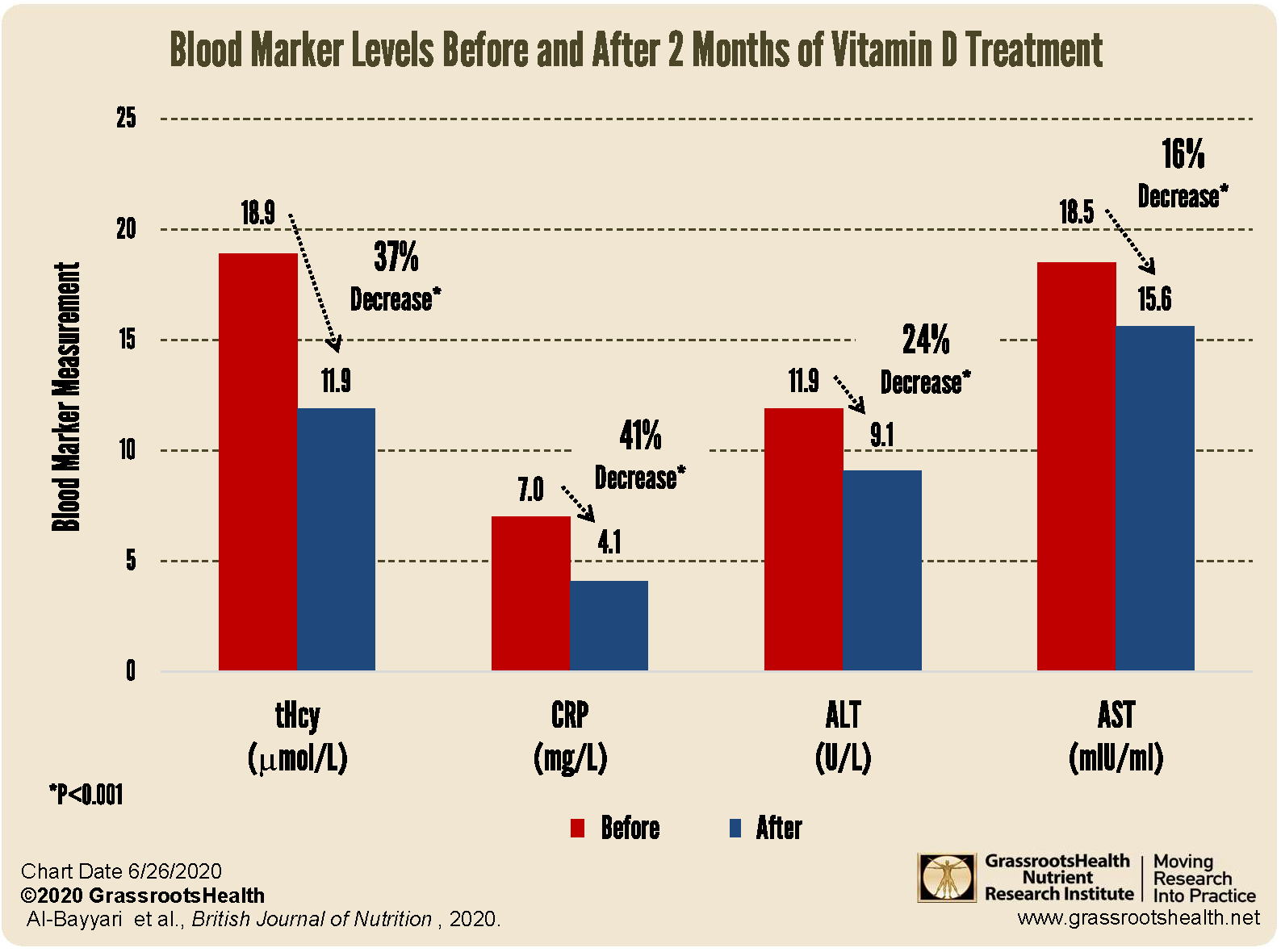
A 2020 randomized double-blind placebo controlled clinical trial conducted by Al-Bayyari et al. demonstrated a relationship between vitamin D supplementation and liver health. The trial consisted of 100 women who were overweight and had vitamin D deficiency. Participants receiving 50,000 IU of vitamin D per week for two months experienced significant decreases in the liver enzymes ALT and AST, as well as decreases in CRP, a marker of inflammation, and homocysteine, a marker associated with cardiovascular risk. The placebo group experienced no significant changes in these markers.
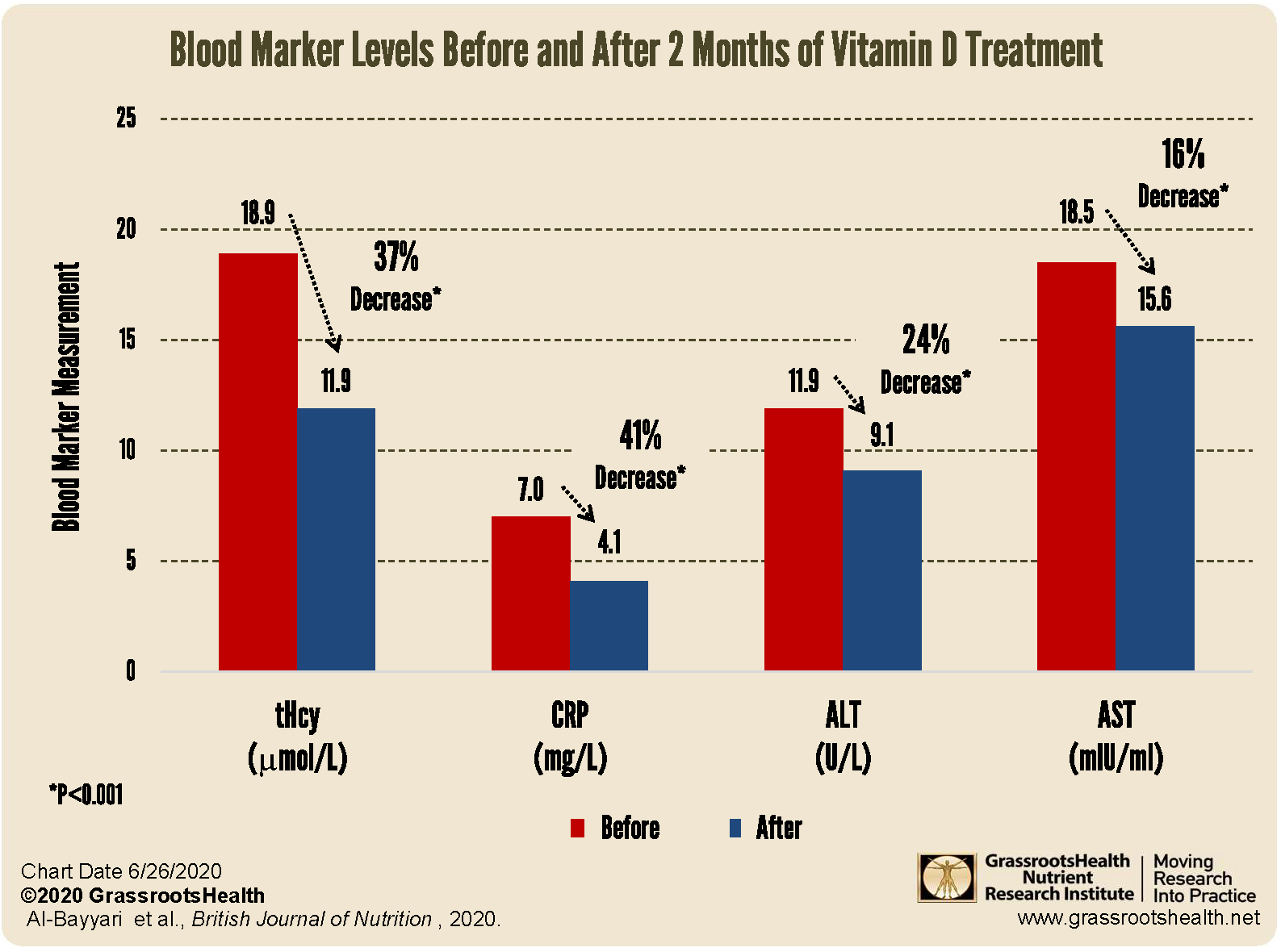
The chart above illustrates the significant changes in liver, inflammation, and cardiovascular health markers seen after vitamin D supplementation.
Higher Vitamin D Linked to Lower Risk of Fatty Liver Disease
Now, a newly published study by He et al. has found a significant relationship between vitamin D status and fatty liver disease. This new study included 35,468 adults undergoing routine health examinations. The average age was 46 years, and nearly 30% of participants were vitamin D deficient (below 20 ng/ml), while another 42% were insufficient (20 to 29 ng/ml).
Among the 29,452 participants with liver ultrasound results, 36.1% had MASLD.
Researchers examined vitamin D levels in relation to fatty liver and several measures of metabolic health, including body mass index (BMI), triglycerides, HDL cholesterol, fasting glucose, and uric acid. After adjusting for age and sex, increasing vitamin D levels were associated with a more favorable metabolic profile, including:
- lower triglycerides
- lower BMI
- higher HDL cholesterol
Higher vitamin D was also associated with lower odds of several metabolic abnormalities, with some of the strongest relationships seen for high triglycerides and fatty liver.
The Vitamin D – Fatty Liver Relationship Remained Even After Accounting for Metabolic Factors
Because obesity, abnormal blood lipids, and impaired glucose metabolism are closely connected to MASLD, the authors wanted to determine whether the apparent relationship with vitamin D could simply be explained by these other metabolic factors. For many of the metabolic outcomes they examined, the relationship with vitamin D became weaker after researchers accounted for these factors. The relationship with fatty liver, however, remained significant.
In fact, for each 4 ng/ml (10 nmol/L) increase in 25(OH)D, the odds of fatty liver were approximately 7% lower after adjustment for BMI, triglycerides, HDL cholesterol, fasting glucose, uric acid, age, and sex. The association remained consistent in both men and women and across different age groups.
Other Metabolic Factors Explained Only Part of the Relationship
The authors then looked to see how much of the relationship between vitamin D and fatty liver could be statistically explained by metabolic factors. They found that 37.6% of the observed association between vitamin D and fatty liver was explained by the metabolic factors measured in the study. Among those factors, triglycerides accounted for the largest portion of the statistically explained association, followed by HDL cholesterol and BMI. Fasting glucose contributed very little, while uric acid did not significantly explain the relationship.
More than 60% of the observed relationship between vitamin D and fatty liver was not explained by the metabolic factors included in the analysis.
The authors concluded that vitamin D status deserves further investigation as a potentially important marker of metabolic liver health.
Vitamin D is an Important Piece of Metabolic Health You Can Measure
MASLD is closely connected to many familiar metabolic risk factors, including excess body fat, abnormal triglycerides and cholesterol, insulin resistance, and inflammation. The latest research suggests that vitamin D status may be another important piece of this metabolic health picture.
The He study does not prove that raising vitamin D will prevent or reverse fatty liver disease. What it does show is that the association between higher vitamin D and lower odds of fatty liver persisted even after researchers accounted for several of the metabolic factors most closely associated with MASLD. And unlike many health factors you cannot see or feel, vitamin D status is easy to measure.
Know your vitamin D level. Test, take action based on your result, and retest to make sure you reach and maintain your target level. Measure your vitamin D with hsCRP levels, or consider the Inflammation Panel for even more health insight.
Order the Inflammation Panel Test Kit
Measuring Your Level is Important… Are You Getting Enough Vitamin D?
The only way to know is to test your levels! Testing versus blind supplementation is essential to know for sure if what you are taking is the right amount for you. Once you test your vitamin D (and other levels) to know where you are NOW, you can account for any upcoming changes in lifestyle over the coming months and adjust your intake to reach (or maintain) your targets.
 Measure your:
- Vitamin D
- Magnesium PLUS Elements
- Omega-3 Fatty Acids
- hsCRP
- HbA1c
- TSH
- Type 1 Diabetes Autoantibodies
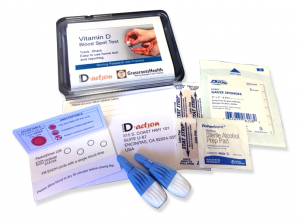
Did you know that each of the above can be measured at home using a simple blood spot test? As part of our ongoing research project, you can order your home blood spot test kit to get your levels, followed by education and steps to take to help you reach your optimal target levels. Start by enrolling and ordering your kit to measure each of the above important markers, and make sure you are getting enough of each to support better mood and wellbeing!
Create your custom home test kit today. Take steps to improve the status of each of these measurements to benefit your overall health. With measurement you can then determine how much is needed and steps to achieve your goals. You can also track your own intakes, symptoms and results to see what works best for YOU.