GrassrootsHealth and the Helen Knoll Foundation launch a joint fundraising campaign to expand access to prevention education, vitamin D testing, and practical resources for lifelong breast health.
Key Points
- GrassrootsHealth and the Helen Knoll Foundation are partnering to expand access to evidence-based breast cancer prevention education and resources for young women.
- Donations will support vitamin D testing, educational materials, online courses, and prevention programs in schools, colleges, and communities.
- Help turn breast cancer awareness into action by supporting initiatives that empower women to make informed decisions about their lifelong breast health.
October is Breast Cancer Prevention Month here at GrassrootsHealth, a time to recognize the importance of vitamin D as a key factor in breast cancer prevention. Awareness is only part of the picture, and it is when we take action that a difference is made. Prevention strategies must begin as early in life as possible… You can help more young women take action to support their breast health long before a diagnosis!
This October, GrassrootsHealth and the Helen Knoll Foundation are joining forces to make evidence-based breast cancer prevention information and resources more accessible to young women, their families, and their health care providers. Together, we are launching a fundraising campaign to support prevention education, vitamin D testing, and practical tools that empower women to make informed decisions about their breast (and overall) health.
Vitamin D is KEY to Prevention
While screening and early detection are important, there remains an essential opportunity to help women understand the lifestyle, nutritional, and environmental factors that may influence breast cancer risk. For nearly two decades, GrassrootsHealth has worked alongside leading scientists to advance understanding of vitamin D and its relationship to disease prevention, including breast cancer. In fact, it was our founder’s breast cancer diagnosis that eventually led her to the vitamin D science.
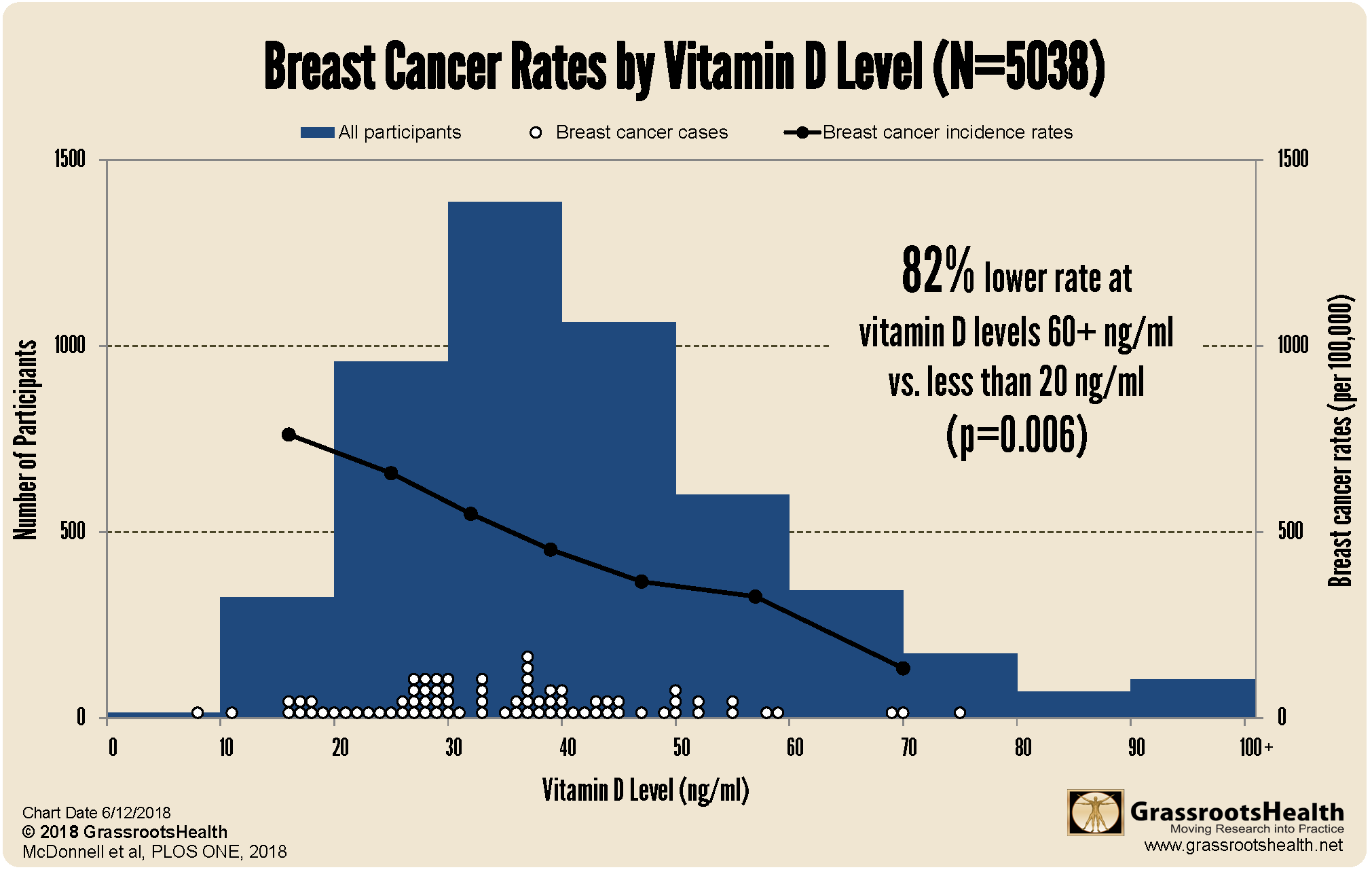
Research has identified associations between higher vitamin D blood levels and lower breast cancer incidence. A 2018 pooled analysis of a randomized trial and a prospective cohort study by McDonnell et al. involved women who were 55 years of age or older. Three different analyses of the data showed similar results when comparing risk reduction between women with a vitamin D level of 60 ng/ml (150 nmol/L) or higher and women with a vitamin D level of 20 ng/ml (50 nmol/L) or less. The first analysis showed women with a vitamin D serum level of 60 ng/ml or greater had an 82% reduced risk of breast cancer compared to those with a vitamin D level of 20 ng/ml or less.
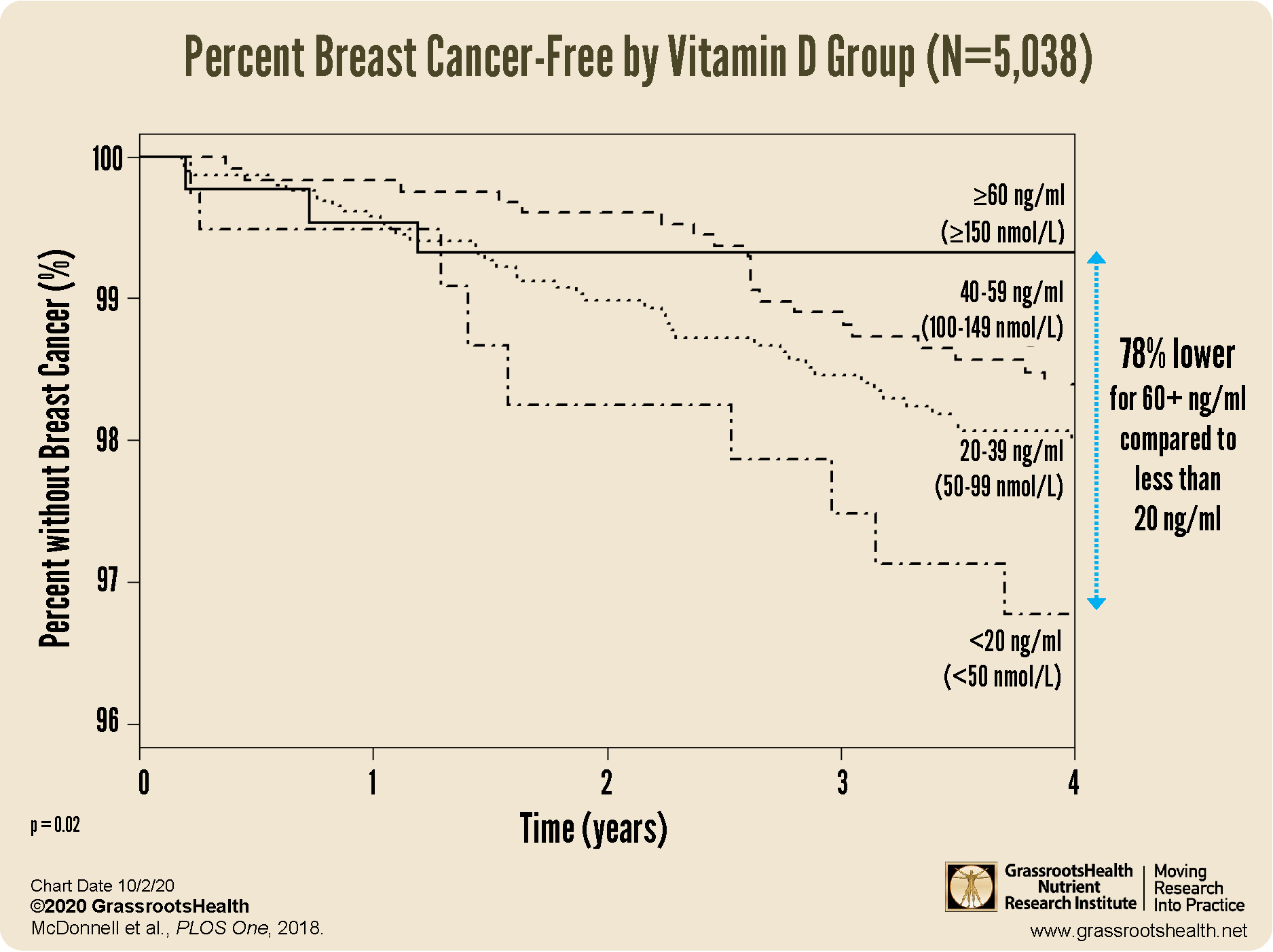
Another analysis from that paper compared the percent of breast cancer-free participants (i.e. those without breast cancer) by vitamin D group. This analysis accounted for vitamin D levels of participants changing over time and for varying lengths of study participation. It showed that for each group of vitamin D, as levels increased, the percent of participants with breast cancer was lower. Specifically, at 4 years the percent of participants with breast cancer was 78% lower for women with vitamin D levels at or above 60 ng/ml compared to women with levels less than 20 ng/ml.
The third analysis from that paper quantified the association between vitamin D level and breast cancer risk after adjusting for age, BMI, smoking status, and calcium supplement intake. This analysis revealed that women with vitamin D levels at or above 60 ng/ml had an 80% lower risk of breast cancer than women with levels less than 20 ng/ml. All three analyses showed similar results – higher vitamin D levels were associated with decreased breast cancer risk, with levels at or above 60 ng/ml being the most protective!
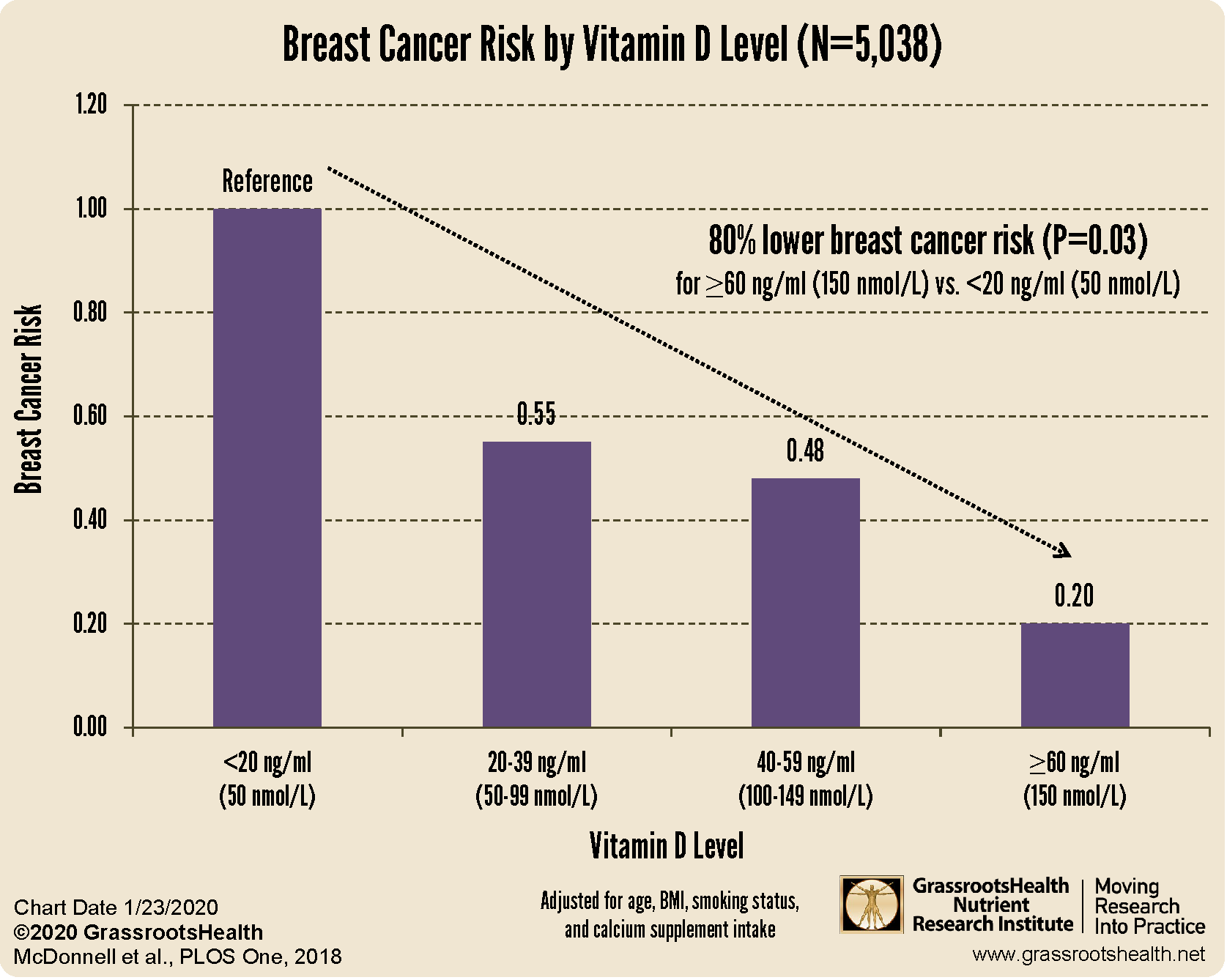
Additionally, since breast cancers diagnosed in the first year were likely present but undiagnosed at the beginning of the study, we also repeated the analysis with only those without breast cancer at one year. We found that those with vitamin D levels at or above 60 ng/ml had a 93% lower risk of breast cancer compared to women with levels less than 20 ng/ml.
To follow these findings, a 2019 meta-analysis by Song et al. analyzed data from 70 observational studies, and found a dose response relationship between vitamin D level and breast cancer risk. Specifically, the researchers found a 6% decrease in breast cancer risk for every 2 ng/ml (5 nmol/L) increase in vitamin D level. This translates to a 71% lower risk from 20 to 60 ng/ml (50 to 150 nmol/L).
These studies and many others show that vitamin D is one of several easily modifiable factors that deserve attention as part of a comprehensive approach to breast health. The Helen Knoll Foundation shares this commitment to prevention, with a particular focus on reaching young women early in life through education, resources, and opportunities to take action. Along with knowing their vitamin D level, they encourage several additional actionable steps young women can take for prevention, including a eating a healthy diet low in sugar and alcohol, exercising regularly, learning how to manage stress, and avoiding artificial estrogens.
Together, our goal is to help young women understand their options and develop healthy habits that can support breast health throughout their lives.
Your Donation Can Help Turn Research Into Action
Breast cancer prevention education should not begin only when a woman reaches screening age or learns she is at increased risk. By reaching young women earlier, we have an opportunity to encourage informed decisions, support healthy habits, and make prevention a more meaningful part of lifelong health care. With your support, we aim to develop and distribute educational materials, provide vitamin D testing and individualized resources, and expand prevention education into schools, colleges, health care settings, and communities.
Your donation, of any amount, will support our shared mission to bring evidence-based prevention education and practical resources to more young women. PLUS, with any donation of $20 or more, you will receive our “Reducing Breast Cancer Risks: A Research & Chart Summary eBooklet” for free.
Help Us Build a Stronger Foundation for Breast Health
DONATE TODAY to Support Breast Cancer Prevention Education
Thank you for helping us move research into practice and build a healthier future for women everywhere.
GrassrootsHealth and the Helen Knoll Foundation are recognized 501(c)(3) nonprofit organizations. Contributions are tax-deductible to the extent allowed by law.
Measuring Your Level is Important… Are You Getting Enough Vitamin D?
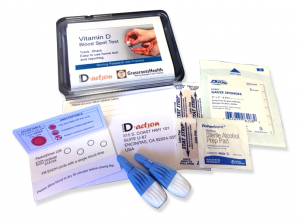
The only way to know is to test your levels! Testing versus blind supplementation is essential to know for sure if what you are taking is the right amount for you. Once you test your vitamin D (and other levels) to know where you are NOW, you can account for any upcoming changes in lifestyle over the coming months and adjust your intake to reach (or maintain) your targets.
 Measure your:
- Vitamin D
- Magnesium PLUS Elements
- Omega-3 Fatty Acids
- hsCRP
- HbA1c
- TSH
- Type 1 Diabetes Autoantibodies
Did you know that each of the above can be measured at home using a simple blood spot test? As part of our ongoing research project, you can order your home blood spot test kit to get your levels, followed by education and steps to take to help you reach your optimal target levels. Start by enrolling and ordering your kit to measure each of the above important markers, and make sure you are getting enough of each to support better mood and wellbeing!
Create your custom home test kit today. Take steps to improve the status of each of these measurements to benefit your overall health. With measurement you can then determine how much is needed and steps to achieve your goals. You can also track your own intakes, symptoms and results to see what works best for YOU.