New research suggests that maintaining adequate vitamin D and B vitamin status may help support healthy brain aging long before dementia develops.
Key Points
- Older adults with mild cognitive impairment had significantly lower blood levels of vitamin D, B1, B2, B6, and folate than those with normal cognitive function.
- Nearly 72% of participants with mild cognitive impairment were vitamin D deficient, compared to 48% of cognitively healthy adults.
- Higher vitamin D levels were associated with a dramatically lower predicted probability of mild cognitive impairment after adjusting for multiple health factors.
- Maintaining adequate vitamin D and B vitamin status may help support healthy cognitive aging and healthier brain biomarkers before dementia develops.
As we age, occasional forgetfulness becomes increasingly common. But for some individuals, memory and thinking problems progress beyond normal aging into a condition known as mild cognitive impairment (MCI). MCI is considered an intermediate stage between healthy cognitive aging and dementia, where memory, attention, language, or other thinking abilities become noticeably impaired while individuals remain largely independent in their daily lives. Not everyone with MCI develops dementia, but people with MCI are at substantially greater risk of doing so in the future.
Vitamin D plays an important role in brain health throughout life, with previous studies showing higher vitamin D levels associated with better cognitive performance, slower cognitive decline, reduced Alzheimer’s disease risk, and improved brain function. Likewise, B vitamins, particularly folate (B9), vitamin B6, and vitamin B12, have been recognized for supporting healthy nerve function, neurotransmitter production, methylation, and regulation of homocysteine, an important marker associated with cognitive decline.
New Study Shows Nutrients with Strong Association to MCI
A new study by Vepakomma et al. suggests that maintaining adequate levels of several key vitamins, especially vitamins D and B6, may be associated with healthier cognitive aging.
The researchers evaluated 184 adults between 55 and 85 years of age living independently in the community. Participants completed the Montreal Cognitive Assessment (MoCA), one of the most widely used screening tools for detecting mild cognitive impairment, while blood samples were collected to measure vitamin D, vitamins B1, B2, B6, B9 (folate), and B12, and brain biomarkers associated with neurodegeneration, including beta-amyloid, tau protein, neurofilament light chain (NfL), and brain-derived neurotrophic factor (BDNF).
Approximately 36% of participants met the criteria for mild cognitive impairment. Compared to participants with normal cognitive function, those with MCI had significantly lower blood concentrations of:
- Vitamin D
- Vitamin B1
- Vitamin B2
- Vitamin B6
- Folate (vitamin B9)
Vitamin B12 levels tended to be lower but did not reach statistical significance. Participants with MCI were also more likely to have elevated HbA1c and higher systolic blood pressure, both established risk factors for cognitive decline.
The Strongest Findings Involved Vitamin D Deficiency
Nearly 72% of individuals with MCI were vitamin D deficient, compared with 48% of those without MCI. Deficiencies in vitamin B2 and folate were also significantly more common among those with cognitive impairment. Researchers found that people with MCI were twice as likely to have multiple vitamin deficiencies rather than just one.
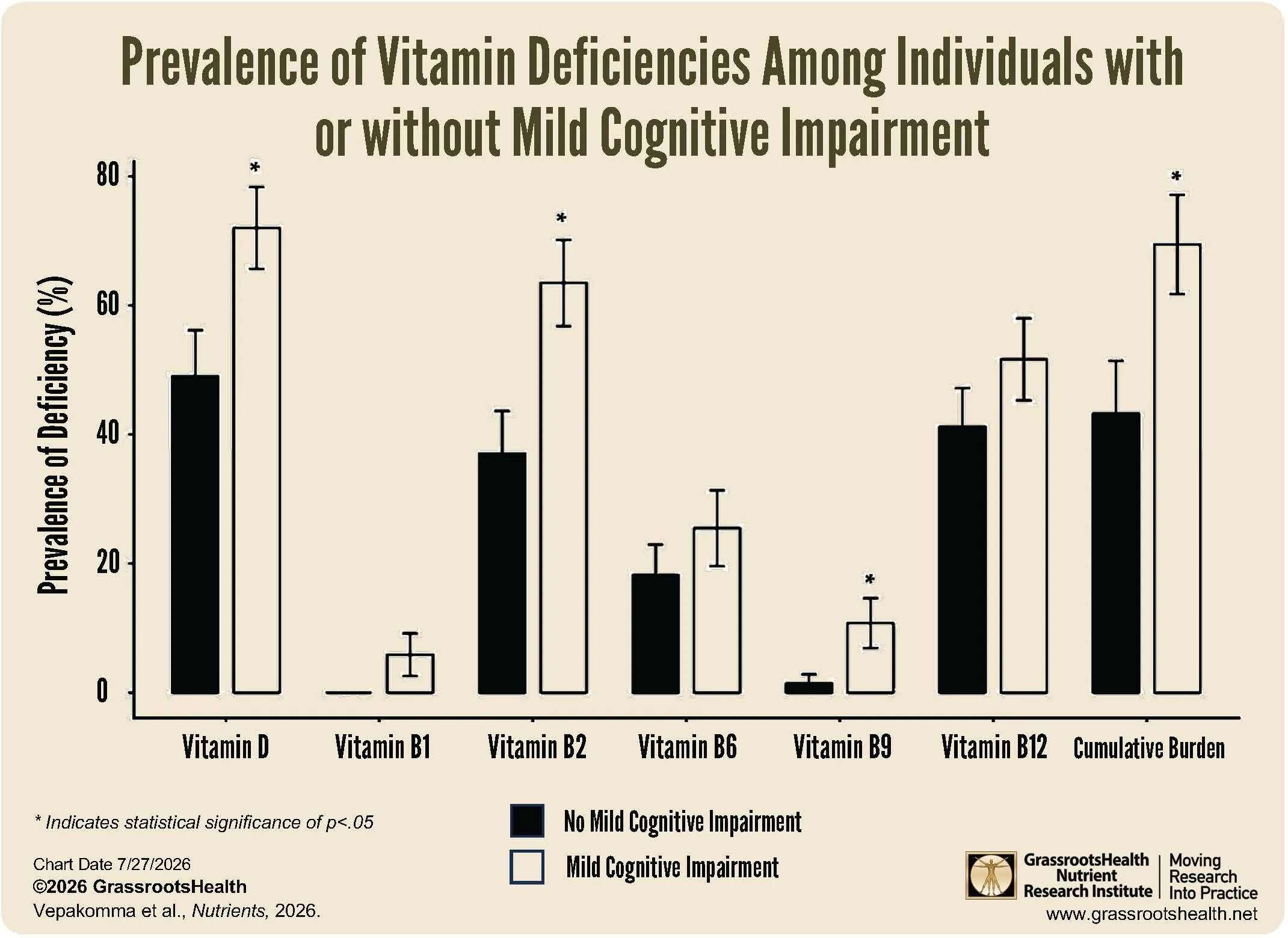
The figure above shows that vitamin D deficiency was the most common deficiency identified among participants with mild cognitive impairment. Deficiencies of vitamin B2 and folate were also significantly more frequent, while the overall burden of multiple vitamin deficiencies was approximately twice as high in the MCI group, suggesting that brain health may be influenced by overall nutritional status rather than any single nutrient alone.
Higher Vitamin Levels Associated with Better Cognitive Performance
When researchers compared blood vitamin levels with participants’ MoCA scores, they found that higher levels of vitamin D, vitamin B6, and folate (vitamin B9) were each associated with significantly better cognitive performance. Positive trends were also observed for vitamins B1 and B2.
Vitamin D showed one of the strongest dose-response relationships
Perhaps the most striking finding came from the dose-response analysis. After accounting for age, sex, education, body weight, blood sugar, blood pressure, and several neuronal biomarkers, researchers found that the predicted probability of having mild cognitive impairment steadily declined as vitamin D levels increased.
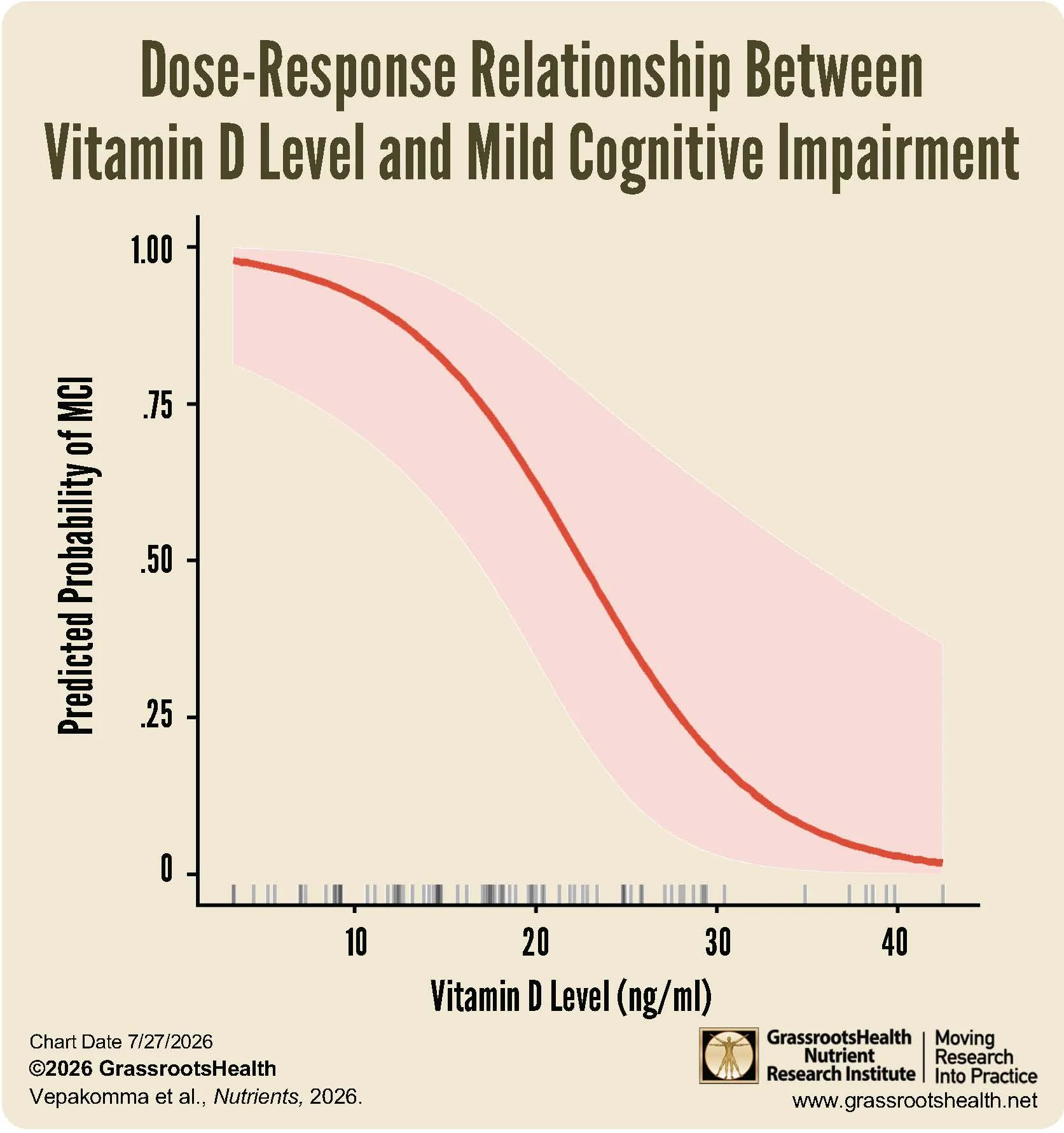
Across the observed range, the estimated probability of MCI fell from approximately 94% at lower vitamin D concentrations (8.3 ng/mL) to about 20% at higher concentrations (29.5 ng/mL). Vitamin B6 demonstrated a similarly strong relationship, while the remaining B vitamins showed more gradual improvements as blood levels increased.
The Bigger Picture
No single nutrient determines whether someone will experience cognitive decline, but this study reinforces an important concept that has emerged across decades of nutrition research: brain health depends on maintaining adequate levels of multiple nutrients that work together.
Vitamin D supports immune regulation, reduces inflammation, influences neuronal signaling, and helps protect brain cells, while B vitamins play critical roles in energy production, neurotransmitter synthesis, DNA methylation, and maintenance of healthy nerve tissue. Rather than acting independently, these nutrients appear to function as part of an interconnected network that supports healthy cognitive aging. Although this cross-sectional study cannot prove that vitamin deficiencies cause mild cognitive impairment, it adds to growing evidence that optimizing vitamin D and B vitamin status may represent a practical, modifiable strategy for supporting brain health before significant cognitive decline develops.
These findings also reinforce the importance of measuring nutrient status rather than relying solely on dietary intake estimates. Regular testing allows individuals to identify deficiencies early and work toward nutrient levels associated with better long-term health, including healthy brain aging.
Measuring Your Level is Important… Are You Getting Enough Vitamin D?
The only way to know is to test your levels! Testing versus blind supplementation is essential to know for sure if what you are taking is the right amount for you. Once you test your vitamin D (and other levels) to know where you are NOW, you can account for any upcoming changes in lifestyle over the coming months and adjust your intake to reach (or maintain) your targets.
 Measure your:
- Vitamin D
- Magnesium PLUS Elements
- Omega-3 Fatty Acids
- hsCRP
- HbA1c
- TSH
- Type 1 Diabetes Autoantibodies
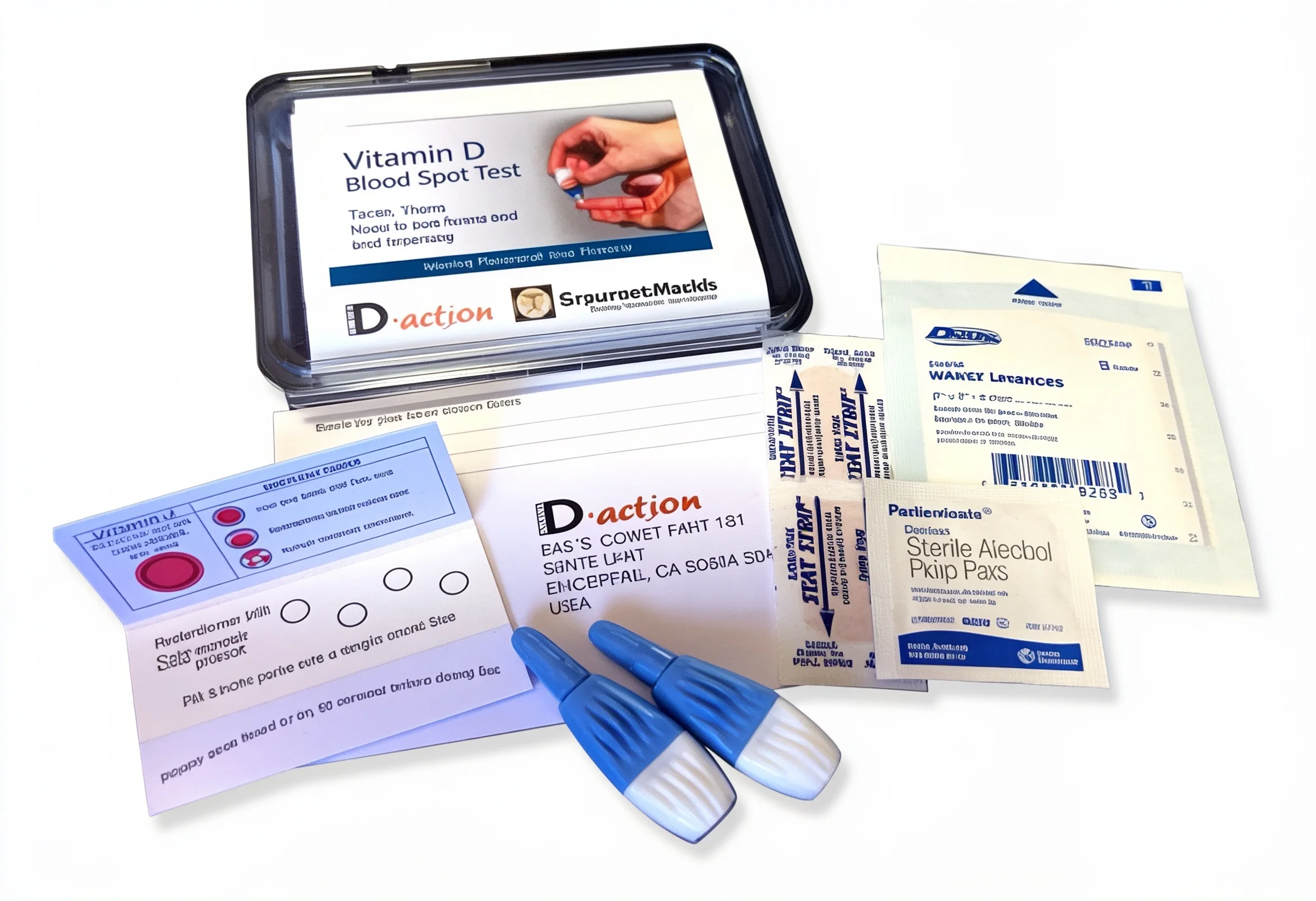
Did you know that each of the above can be measured at home using a simple blood spot test? As part of our ongoing research project, you can order your home blood spot test kit to get your levels, followed by education and steps to take to help you reach your optimal target levels. Start by enrolling and ordering your kit to measure each of the above important markers, and make sure you are getting enough of each to support better mood and wellbeing!
Create your custom home test kit today. Take steps to improve the status of each of these measurements to benefit your overall health. With measurement you can then determine how much is needed and steps to achieve your goals. You can also track your own intakes, symptoms and results to see what works best for YOU.