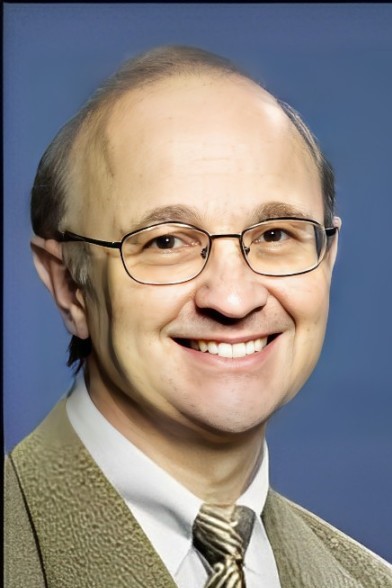
Professor Emeritus, Department of Medicine & Pathology / Laboratory Medicine
University of Toronto & Mount Sinai Hospital, Toronto, Canada
Google Scholar: https://scholar.google.com/citations?hl=en&user=s6PQPQQAAAAJ
ResearchGate: https://www.researchgate.net/profile/Reinhold-Vieth
Watch Dr. Vieth explain vitamin D safety
ABOUT DR. VIETH
Dr. Reinhold Vieth is an internationally recognized authority on vitamin D, clinical nutrition, and human biochemistry. He is Professor Emeritus at the University of Toronto and Mount Sinai Hospital in Toronto, Canada, where he has dedicated decades to studying vitamin D metabolism, safety, and its effects on chronic disease prevention.
With a career spanning more than 35 years, Dr. Vieth’s research has provided critical insights into how vitamin D functions in the human body, from calcium regulation and bone health to its broader influence on immunity, cancer, and autoimmune disorders.
He has been an influential voice in shaping global vitamin D policy, urging regulatory agencies to reconsider conservative upper intake limits based on outdated toxicity assumptions. His extensive work has been instrumental in advancing a balanced, evidence-based understanding of vitamin D safety and efficacy.
Dr. Vieth has collaborated with many leading researchers and organizations, including GrassrootsHealth, where his insights have helped educate the public and health professionals on achieving and maintaining optimal vitamin D levels for disease prevention and overall well-being.
KEY CONTRIBUTIONS & RESEARCH IMPACT
- Vitamin D Toxicity & Safety:
In his landmark paper “Vitamin D Toxicity, Policy, and Science” (J Bone Miner Res, 2007), Dr. Vieth examined misconceptions surrounding vitamin D toxicity and emphasized that intakes up to 10,000 IU per day are safe for most healthy adults. His findings have influenced international guidelines and clinical practice discussions. - Dose–Response Studies:
Through rigorous clinical trials, he established the relationship between vitamin D intake and serum 25(OH)D concentrations, showing that standard supplementation often falls short of achieving optimal levels. (Am J Clin Nutr, 1999) - Evolution, Skin Color & Vitamin D:
Dr. Vieth presented compelling evidence that human skin pigmentation evolved as an adaptive mechanism to balance UV exposure and vitamin D synthesis. This evolutionary framework helps explain disparities in vitamin D status and related health outcomes among populations. (GrassrootsHealth Blog, 2024) - Multiple Sclerosis & Autoimmunity:
He has contributed to studies investigating vitamin D’s protective role against autoimmune diseases such as multiple sclerosis, highlighting how latitude and sun exposure influence disease prevalence. - Policy and Education:
Beyond the lab, Dr. Vieth has been an outspoken advocate for improving vitamin D awareness and integrating nutrient optimization into public health strategies.
AWARDS & RECOGNITION
- Arnold-Rikli Prize (1998) — awarded in Basel, Switzerland, for outstanding contributions to vitamin D and photobiology research.
- Recognized as a leading global authority on vitamin D policy and safety, frequently invited to speak at international conferences and scientific symposia.
- Served as advisor and reviewer for several health organizations and journals, contributing to improved public health guidelines for vitamin D intake.
TOP PUBLICATIONS — PEER-REVIEWED (Selected)
- Vieth R. Vitamin D toxicity, policy, and science. J Bone Miner Res. 2007; 22(Suppl 2):V64–V68. https://pubmed.ncbi.nlm.nih.gov/18290725/
- Vieth R. Vitamin D supplementation, 25-hydroxyvitamin D concentrations, and safety. Am J Clin Nutr. 1999;69(5):842–856. https://pubmed.ncbi.nlm.nih.gov/10232622/
- Vieth R, Chan PC, MacFarlane GD. Efficacy and safety of vitamin D3 intake exceeding the lowest observed adverse effect level. Am J Clin Nutr. 2001;73(2):288–294. https://pubmed.ncbi.nlm.nih.gov/11157326/
- Vieth R. Vitamin D: evolutionary, physiological, and health perspectives. Experimental Biology & Medicine. 2011;236(11):1279–1287. https://pubmed.ncbi.nlm.nih.gov/22068287/