Join the D*action Study

Check Vitamin D

Do You Know Your Vitamin D Level?

Find out with our home test kit while contributing to valuable research.
Research has demonstrated many health benefits of higher vitamin D levels. What do scientists say is the target amount? 48 world-wide vitamin D researchers agree it is 40-60 ng/ml (100-150 nmol/L). Determine your level today.

Test your level without study participation.

How it All Works

Being a D*action Study Participant

Having and maintaining healthy vitamin D and other nutrient levels can help improve your health now and for your future. Measuring is the only way to make sure you are getting enough!

Step 1

Order Your Test Kit

Order your home vitamin D test kit
(Include other nutrients or levels of your choice).

Step 2

Questionaire

Complete the health and habits questionnaire, including supplement intake and sun exposure.

Step 3

Review Your Results

Get your vitamin D result – it will be posted to your online account.

GrassrootsHealth scientists recommend a vitamin D level of 40-60 ng/ml (100-150 nmol/L)  Is your level where you want it to be? If so – GREAT!  Keep up the good work and continue participating in the project to provide more data on what it means to have a healthy vitamin D level.

If your vitamin D level is not in your target range, follow the next steps:

Step 4

D*calculator

Use the D*calculator to determine an adjusted vitamin D supplement amount and educate yourself on other factors that affect vitamin D levels.

Step 5

Track

Track your changes and re-test in 3-6 months (or sooner if trying a loading dose).

Step 6

Goal

How did your changes affect your vitamin D level? Did you reach your goal? Determine if additional adjustments are needed… repeat again if necessary.

Include Additional Markers in Your D*action Home Blood Spot Test Kit

Customize your D*action test with additional measurements to gain a broader understanding of your nutrient status, inflammation, blood sugar health, and other important health markers.

hsCRP – Inflammation Marker

Measure high-sensitivity C-reactive protein (hsCRP), a marker that can help identify levels of inflammation in the body. Tracking inflammation alongside your nutrient levels can provide additional insight into factors affecting your overall health.

HbA1c – Blood Sugar Health

HbA1c provides insight into your average blood sugar levels over the previous few months. Including this marker in your test kit can help you better understand your metabolic and blood sugar health.

Essential Nutrient Status – Zinc & Selenium

Zinc and selenium are essential nutrients that support many important functions in the body. Measuring your levels can provide insight into your nutrient status and potential imbalances. Understanding your results can help guide nutrition and supplementation decisions.

Toxic Element Exposure – Mercury & Cadmium

Mercury and cadmium are toxic elements that may enter the body through environmental or dietary exposure. Measuring these markers can provide insight into your potential exposure and overall health profile. Tracking your levels may help you better understand changes over time.

Measure Your Vitamin D Level From Home

Prefer to test your vitamin D level on your own, without joining the D*action study? Order a Vitamin D Home Blood Spot Test through CheckYourD.

Other Test Kits Available

  • Vitamin D Home Blood Spot Test
    Through CheckYourD.org

  • Cardiometabolic Wellness Panel
    Allows early detection of major indicators associated with metabolic/insulin resistance syndrome.

Omega-3s & Omega-6s

Just as with vitamin D deficiency, omega-3 deficiency and an imbalance in omega-6s and omega-3s can put you at risk for chronic disease.

Over 23,000 published research papers support positive health benefits of high omega-3s, with more than 6000 supporting cardiovascular benefits, over 1000 showing respiratory benefits, and more than 2000 showing a benefit to diabetes conditions. Hundreds of studies suggest that omega-3 may provide benefit for a wide range of diseases, including asthma, depression, ADHD, autoimmune diseases, and cancer. Higher omega-3s (and lower omega-6s) have been associated with improved cognitive function, lower risk of dementia, longer life, and a reduced relative risk for death from any cause. They are beneficial for normal vision, anti-aging, skin health, maternal health, immune system, brain health, heart health, normal liver function, joints and muscles.

Include measuring your omegas with your D*action study test kit.

Magnesium & Other Elements

Over 45% of the US population consumes less than the average daily requirement of magnesium, thus are very likely deficient.  Are you getting adequate amounts? 

Adding the Elements Panel to your D*action study test kit will include your levels of Magnesium, Selenium, Zinc, and Copper, along with toxic elements Mercury and Cadmium. Everyone experiences a unique response to supplementation or nutrient intake called the dose-response, which can be due to factors such as current health conditions, digestive health, co-nutrient status, medications, genetics and more.  In fact, magnesium is one of the most influential co-factors for vitamin D! Measuring your nutrient status, adjusting intake as needed, and re-testing is the only way to tell if your nutrient intake is helping you achieve sufficient or desired nutrient status which is tied to particular health outcomes.  

How it Works

In 2007, when GrassrootsHealth was formed, it was very hard to get a vitamin D test from your doctor, even though research was surfacing on the benefits of vitamin D levels in the range 40-60 ng/ml (100-150 nmol/L).

The D*action field trial was born. Now with over 15,000 self-subscribed participants, D*action not only helps people take charge of their health from the comfort of their home, it provides much needed peer-reviewed research on a vitamin D replete cohort. (The average vitamin D serum level of participants in D*action is 44 ng/ml, as compared to 25 ng/ml in the normal population).

Take Charge of Your Health While Making an Impact

After sending in your test kit and signing up to join the project, you’ll answer some basic health and lifestyle questions online that will contribute to your ability to see how your information fits with a much larger group, giving you feedback not only on your health but enabling you to see how you compare with others.

Real people. Real stories.

People tell us how vitamin D has greatly improved the quality of their lives. Subscribe to our newsletter so we can share their life changing experiences with you.

Ready to get the information to help take charge of your health?

By participating in this project, you will learn your individual response to supplementation via blood testing and analysis of additional health details

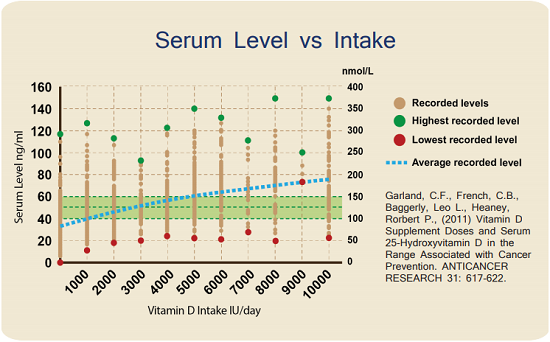
Everyone experiences a unique response to supplementation or nutrient intake called the dose-response, which can be due to factors such as current health conditions, digestive health, co-nutrient status, medications, genetics and more. The vitamin D dose-response chart here illustrates the wide variation in response for individuals at a specific intake amount. For example, among those taking 5000 IU/day of vitamin D, resulting serum levels ranged from about 20 to 140 ng/ml. Similar variations are seen with omega-3s. With this testing, you can learn your individual dose-response.

Magnesium can be one of the most influential factors affecting the vitamin D dose response and vitamin D related health outcomes. Measuring your nutrient status, adjusting intake as needed, and re-testing is the only way to tell if your nutrient intake is helping you achieve sufficient or desired nutrient status which is tied to particular health outcomes.