The buttons above the results narrow things down without typing anything.
Popular searches
Tip: quotation marks narrow a search
The buttons above the results narrow things down without typing anything.
Popular searches
Tip: quotation marks narrow a search
An increasing body of evidence has shown that chronic inflammation can cause or advance many common chronic diseases, such as diabetes, with higher levels of cellular inflammation indicating a greater risk of the development of and/or accelerated progression towards chronic disease. The following combination of tests can be used to help track and manage inflammation.
As part of this project, participants will also test for the presence of
This project will help identify potential changes in T1D diagnosis and autoantibody status that may result from vitamin D and omega-3 fatty acid testing and education, as well as provide additional education about T1D autoantibodies, inflammation, and other T1D related information. Watch this video for more information on participating in the project and testing with the home blood spot test kits.
Family history is an indicator of T1D risk, however, other factors are associated with the development and progression of T1D, such as inflammation, autoantibodies, vitamin D3 deficiency, even viral infection. The presence of islet cell autoantibodies indicates an autoimmune response against the cells of the pancreas, and is strongly associated with development of T1D. Specific T1D autoantibodies are
Improved vitamin D3 and long-chain omega-3 status, as well as decreased inflammation, have been associated with lower levels of these autoantibodies and therefore lower risk of T1D development.
Please consider a donation towards a scholarship fund to help children and their families gain access to this opportunity to receive free testing and help prevent T1D. The fees associated with the testing in this program (3 test kits over a span of approximately 18 months, at a cost of $315 plus shipping per kit) may not be affordable for everyone interested, and we highly encourage donations to help sponsor participation. Can you sponsor a qualifying participant in the study? Even sponsoring a single test kit could make a big difference for someone at risk.
Our study coordinator is likely one of the most knowledgeable individuals on this topic… check out her story below! GrassrootsHealth is excited to be working on this project with Sonia Chritton, as she brings years of experience, research, and involvement with the protocol and within the T1D community.
Schedule a call with Sonia to discuss the project here.
An increasing body of evidence has shown that chronic inflammation can cause or advance many common chronic diseases (1), with higher levels of cellular inflammation indicating a greater risk of the development of and/or accelerated progression towards chronic disease. Type 1 Diabetes (T1D) is one of the diseases that are highly affected by inflammation (2,3).
It is known that progression to many forms of diabetes, including T1D, can be predicted by measuring levels of inflammation. Research has also shown that vitamin D and omega-3 fatty acids are both anti-inflammatory (4,5), therefore, progression of T1D could be predicted by measuring levels of inflammation using such blood spot tests as 25(OH)D (6,7,8) and the ratio of AA:EPA (9). 48 international vitamin D researchers have recommended a vitamin D serum level of 40-60 ng/ml (100-150 nmol/L) for the prevention of many chronic diseases, while a AA:EPA ratio of <3 is a target for the most reduced rates of chronic inflammation.
Numerous studies show that intake of vitamin D and omega-3 fatty acids reduces inflammation (10,11). A number of health conditions related to low vitamin D have also been correlated to low levels of omega-3 fatty acids (12-21). Anecdotal evidence suggests a role of vitamin D and omega-3 fatty acids in possibly reversing or stopping this progression. (5,22) Epidemiologic studies show that children given Cod Liver Oil, which contains both vitamin D and omega-3 fatty acids have significantly reduced rates of diagnosis of T1D. (23,24,25)
Studies have also examined the incidence of T1D in countries at different latitudes, and found that countries further away from the equator, where there is less UVB available to produce vitamin D in the skin year-round, have a higher incidence of T1D.
Omega-3s are often found in foods that are also naturally high in vitamin D (such as fatty fish). There is very little research available on the combined effect of vitamin D and omega-3 fatty acid intake and resulting blood levels on specific health outcomes. Incorporating omega-3 education and testing (using omega-3 status testing such as the Omega-3 Index and the ratio of AA:EPA (27,28)) along with vitamin D education and testing will help shed light on such a combined effect. It will also allow us to study levels of both nutrients independent of consumption since the effect of intake on blood status will vary from person to person, and it may take different doses to reduce inflammation if a person has a diet high in AA. The ratio of omega-6 (pro-inflammatory) to omega-3 (anti-inflammatory) fatty acids in humans has changed from 1:1 to 20-30:1 over time (4,29,30).
This study sub-set will help identify potential changes in the progression towards a T1D diagnosis that may result from nutrient status testing and education of both vitamin D and omega-3 fatty acids, as well as provide additional education about T1D autoantibodies, inflammation and anti- and pro-inflammatory foods, and other T1D related information.
Register to have your vitamin D and Omega-3 Index with AA:EPA ratio and T1D autoantibody levels tracked every 3-6 months, and be an important part of this project to solve the type 1 diabetes epidemic.
T1D has been diagnosed in approximately 1.3 million people in the U.S., including about 200,000 young people under 20 years old. The incidence continues to increase 3-5% annually. By 2050, the expected prevalence of T1D is estimated to be 5 million people in the U.S., including 600,000 young people. Expected lifetime medical expenses and income loss due to diabetes total approximately $643 billion in the U.S. (2016).
Sonia Chritton, PreventT1D.org
I believe the most cathartic way of dealing with a life changing event is to dig in and get involved!
Shortly after my son was diagnosed with T1D, we enrolled his older brother and his younger sister in two observational studies. The goal was to learn his genetic risk by finding out his allele combination. The highest risk alleles are DR3 and DR4. You get one from each parent – so nobody can inherit T1D from “his or her” side of the family. I also wanted to learn whether or not they had started developing autoantibodies. The autoantibodies are IAA, GADA, IA-2A and ZNT8.
While on a volunteer assignment reviewing grants, I read a powerful proposal articulating the correlation between inflammation and T1D. The timing was critical because shortly after that, I received a call from the head of the study my eldest son was enrolled in letting us know that he was positive for two autoantibodies. I immediately thought of that amazing grant and compelling logic. We found that Ben not only had the autoantibodies confirmed, but his level of inflammation was high.
I was desperate to find out what we could do to stop progression. One child with T1D was enough!
In the grant proposal, they were suggesting fish oil. This would be the key component in our attempt to delay progression. As a mom, I figured it couldn’t hurt to reach out to brilliant medical professionals in the field of T1D prevention. I asked:
“If this was your child, what would you try?”
Here was their feedback that led to “Ben’s cocktail”
2. From experts in Nutritional Epidemiology – remember the Vitamin D. Consider reading papers about Cod Liver Oil (CLO) and correlation with the risk of diabetes.
3. There was a question about whether or not gluten has a role to play. Every child with T1D and immediate family member should be screened for the autoantibodies for celiac. (http://www.ncbi.nlm.nih.gov/pubmed/23469110)
We gave it a try and his autoantibodies present in August of 2007 were gone in November of 2007.
He stayed on the cocktail and remained negative until 5/2010. About age 14, he thought he knew EVERYTHING and started “pocketing” the supplements. After skipping the DHA, he became autoantibody positive again, and was convinced to go back on the “cocktail”. That worked for a few years, and then he went away to college and chose to skip again. This led to another scare with autoantibody positivity. He went back on the DHA and reversed again, and didn’t have any more autoantibodies for many years. At age 28 he went off the cocktail. He thought the risk was gone and also started on a diet for his heavy weight lifting competitions that was very high in n-6 (lots of bacon). He then tested positive for one of the newly defined autoantibodies (ZnT8). So…the journey continued. He agreed to go back on fish oil (he started taking Dr. Sears’ Zone web site fish oil). This is what I take as well and use the code Poseidon, which is the name of the study for new-onsets. Anyway, good news again – his ZNT8 autoantibody reversed! This roller coaster of watching him go up and down has correlated with HIS choice of whether or not to take supplements. He was told he would become diabetic when he was 11 within “months”, and he just turned 34! So 23 years later, I am glad that he has been willing to give it a try.
My daughter has never been autoantibody positive, even though she has the highest risk profile (identical to her diabetic brother). I bring this up because a child at high risk without autoantibodies may benefit too. With her, we tried DHA plus vaccination for chickenpox and BCG. Who knows what worked – but she has made it to age 28 without autoantibodies.
Resolving inflammation is a problem with a practical solution. We know inflammatory cytokines are elevated prior to the onset of Type 2 diabetes, and inflammation can also predict who develops gestational diabetes. So we looked at how this might affect prevention of T1D. This was just “observational only” , but it is worth a read to see who are the “reverters” and “non-progressors”. (http://www.ncbi.nlm.nih.gov/pubmed/15448085)
The pilot study to look at DHA or placebo in pregnant mothers and infants was called Nutritional Intervention to Prevent (NIP) Diabetes. The DHA was well tolerated, and participants were compliant. Fatty acid and inflammation levels were measured. The study was not powered to show prevention, but it did show that a larger and longer trial could work. (http://www.ncbi.nlm.nih.gov/pubmed/25039804)
This dietary intervention approach meets the “Three Legs of the Stool” which requires that it must be SAFE, EFFICACIOUS and AFFORDABLE in the general population.
Limiting inflammation through the use of high dose DHA has been proven to be safe and effective in other related autoimmune disorders such as rheumatoid arthritis and lupus.
Evidence suggests a role of vitamin D and omega-3 in possibly reversing or stopping progression from developing autoantibodies to a T1D diagnosis. The D*action T1D Prevention project will help identify potential changes in T1D diagnosis that may result from vitamin D and omega-3 fatty acid testing and education, as well as provide additional education about islet autoantibodies, inflammation, and other T1D related information.
Multiple studies have published the observed link between lower 25(OH)D concentration and the increased incidence and development of T1D. Recently, the Juvenile Diabetes Research Foundation, the American Diabetes Association and the Endocrine Society have recognized that T1D should be diagnosed when a person develops multiple islet autoantibodies (stage 1), possibly irreversibly leading to dysglycemia (stage 2) and symptomatic hyperglycemia (stage 3). However, anecdotal evidence suggests vitamin D and omega-3 fatty acids could possibly reverse or stop this progression. It is also known that progression to many forms of diabetes, including T1D, can be predicted by measuring levels of inflammation. Numerous studies show that intake of vitamin D and omega-3 fatty acids reduces inflammation.
Experts also believe that T1D can be triggered by vitamin D3 deficiency, which is common. An extremely delicate membrane in the pancreas separates the endocrine cells that produce insulin (beta cells) from the exocrine cells that secrete pancreatic enzymes. The beta cells reside in fluid compartments, and are protected there by the membrane that surrounds them. Vitamin D3 strengthens this membrane and reduces the intensity of the immune attack on beta cells, helping to decrease the risk of developing autoantibodies and T1D.
Anyone who is interested in tracking their vitamin D, omega-3, HbA1c and hsCRP levels, and who is concerned about T1D, can participate in this project. This includes anyone of any age, with or without a T1D diagnosis.
We strongly encourage enrollment of those who have tested positive for one or more of the known islet cell autoantibodies, and have not yet been diagnosed with T1D. Those who are family members of individuals diagnosed with T1D, and those who are newly diagnosed, are also welcome to enroll, however, they will not qualify for the scholarship for free testing .
Yes, individuals from any country are invited to join, however, some countries may have mailing restrictions that could affect shipment of the home blood spot test kits.
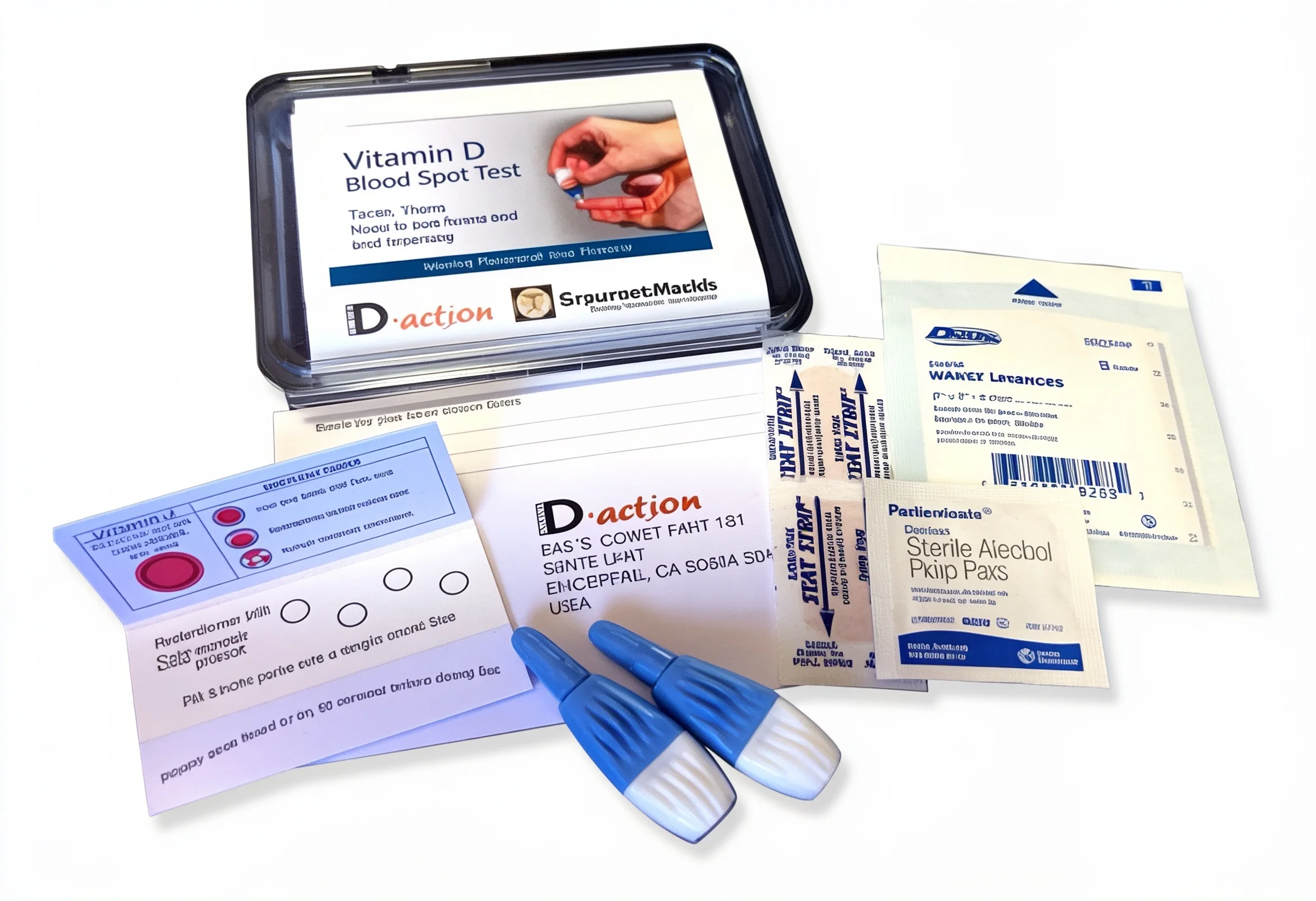
Participating in this project includes providing health information via an online questionnaire and completing a home blood spot test to measure the vitamin D, Omega-3 Index, AA:EPA Ratio, HbA1c and hsCRP levels every 3 months, for a period of 5 years or for as long as the participant chooses. The steps to enroll and participate in the T1D Prevention project are as follows:
The Inflammation Panel test kit costs $208 plus shipping, and needs to be completed every 3 months. It includes testing for vitamin D, Omega-3 Index, AA:EPA and Omega-6:Omega-3 Ratios, hsCRP and HbA1c. Scholarships are available to individuals who are autoantibody positive and not yet diagnosed with T1D (see below).
Scholarships are available to those who have been identified as being at risk for developing T1D, by having tested positive for one or more of the known islet autoantibodies for T1D. The scholarship will cover the all tests in the Inflammation Panel listed above (Vitamin D, Omega-3 Index, AA:EPA Ratio, hs-CRP and HbA1c).
If you are positive for one or more of the islet cell autoantibodies, and you would like to request a scholarship for free testing, please register for your participation, complete the questionnaire, and email jen@grassrootshealth.org to request scholarship help.
Please consider a donation towards this scholarship fund – help children and their families gain access to this opportunity to receive free testing and help prevent T1D.
Yes! A separate account with unique email and Participant ID are needed for each member. However, kits can be ordered from one account if needed.