The buttons above the results narrow things down without typing anything.
Popular searches
Tip: quotation marks narrow a search
The buttons above the results narrow things down without typing anything.
Popular searches
Tip: quotation marks narrow a search
“Mom… I feel like I’m dying.” The latest statistics show that almost 60% of teenage female students experienced persistent feelings of sadness or hopelessness and nearly 25% made a suicide plan. One mom’s story could help many others.
The CDC recently released its bi-annual “Youth Risk Behavior Survey: Data Summary & Trends Report”, providing 10-year trends of health and well-being among US high school students. This was the first of the surveys to include data collected since the onset of the COVID-19 pandemic.
Key findings from the survey include
“In 2021, almost 60% of female students experienced persistent feelings of sadness or hopelessness during the past year and nearly 25% made a suicide plan.”
Vitamin D and other nutrients may not be on the forefront of your mind when thinking about how to improve these statistics for our teens, however, take a look at the story below on how vitamin D alone improved the overall general and mental health and mood of one teenage girl – it might help shed more light on how essential these nutrients are for our well-being!
In the Fall of 2019, my happy, vibrant then 17-year-old daughter found herself too fatigued to continue to run cross-country. During that Fall, she was sick constantly, tired, and had extreme symptoms of PMS which then changed to crying for no reason around Thanksgiving on a daily basis. She came to me and said, “Mom, something is wrong with me; I feel like I’m dying.” I was concerned. I did not want my daughter to go the route of anti-depressants and unnecessary birth control pills. Talking through her symptoms, health history, and personality with our healthcare provider, who is a naturopathic doctor and a nurse practitioner, she recommended getting her vitamin D levels drawn. Her level was 9 ng/ml.
Thinking of my daughter’s history: she was slow to grow, talked late, had skin issues, food allergies, multiple fractures, and childhood cavities. Her growing-up years were spent not under the blue skies of North Dakota but a polluted city of 7 million in southern China. In addition, during the previous two summers she had held a job as a locker room attendant at our community pool—inside a concrete box for 6-8 hours per day/ 5 days per week. Now I know she was a prime candidate for extreme vitamin D deficiency and likely had been for most of her life.
After a few days on vitamin D supplements, she quit crying daily, after two weeks she started to have less pain, and three months later, her level was up to 35 ng/ml. To this day, she must take 10K from October to May and 5K the other months in addition to co-nutrients in addition to intentionally having daily sun exposure in the summer months in order to keep her levels between 40-60 ng/ml.
The good news, my daughter is now in charge of her own health and knows that she needs to monitor her vitamin D levels for a healthier life.
– Beth (North Dakota)
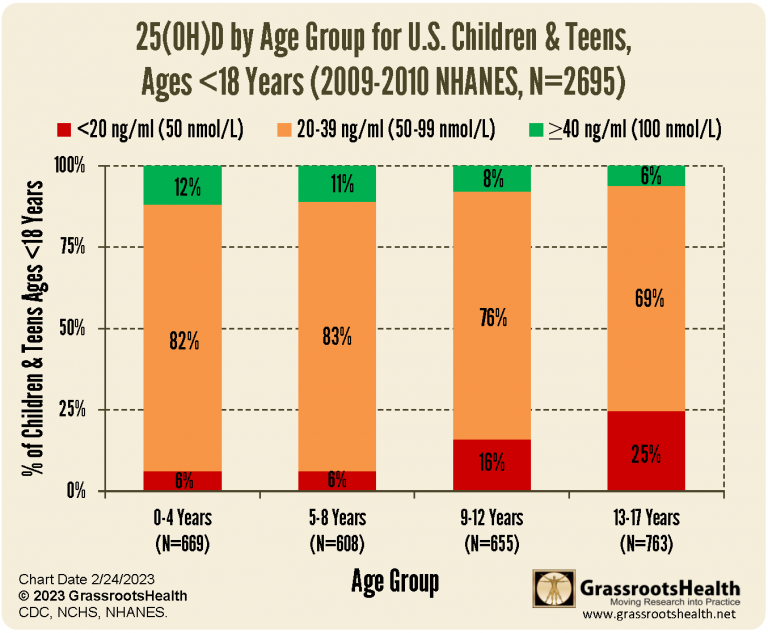
In the past, we have looked at vitamin D trends among children and teens (under the age of 18) in the general US population. Based on the National Health and Nutrition Examination Survey (NHANES) 2009-2010 data set, there was a clear decline in vitamin D levels as children age, with the highest prevalence of deficiency among older teenagers. In fact, 25% of older teens (ages 13-17 years) had vitamin D levels BELOW 20 ng/ml (50 nmol/L)!
As illustrated in the chart above
Learn more about how each of these nutrients can affect our mental-emotional wellbeing, cognition, and mood here.
Vitamin D
Vitamin D can improve self-perceived measurements of mental and emotional wellness; improvements have been positively associated with higher vitamin D levels
Omega-3s
Omega-3s reduce symptoms of major depressive disorder with benefits beyond those taking antidepressants alone. Omega-3s, especially EPA, may also improve clinical anxiety symptoms.
Vitamin D in combination with omega 3s
Vitamin D in combination with omega-3s can contribute to especially significant improvements in depression, anxiety, stress, and sleep scores; in one study, supplementing with both had a greater effect on anxiety, stress, and sleep than either on its own or placebo
Magnesium
Magnesium supplementation has demonstrated rapid and significant reductions in stress with a 24% greater improvement in stress in those receiving magnesium with vitamin B6
Zinc and the copper to zinc ratio
Zinc and the copper to zinc ratio have also been correlated with anxiety and depression
Having and maintaining healthy vitamin D levels and other nutrient levels can help improve your health now and for your future. Choose which additional nutrients to measure, such as your omega-3s and essential minerals including magnesium and zinc, by creating your custom home test kit today. Take steps to improve the status of each of these measurements to benefit your overall health. With measurement you can then determine how much is needed and steps to achieve your goals. You can also track your own intakes, symptoms and results to see what works best for YOU.
Having and maintaining healthy vitamin D and other nutrient levels can help improve your health now and for your future. Measuring is the only way to make sure you are getting enough!
Step 1
Order Your Test Kit
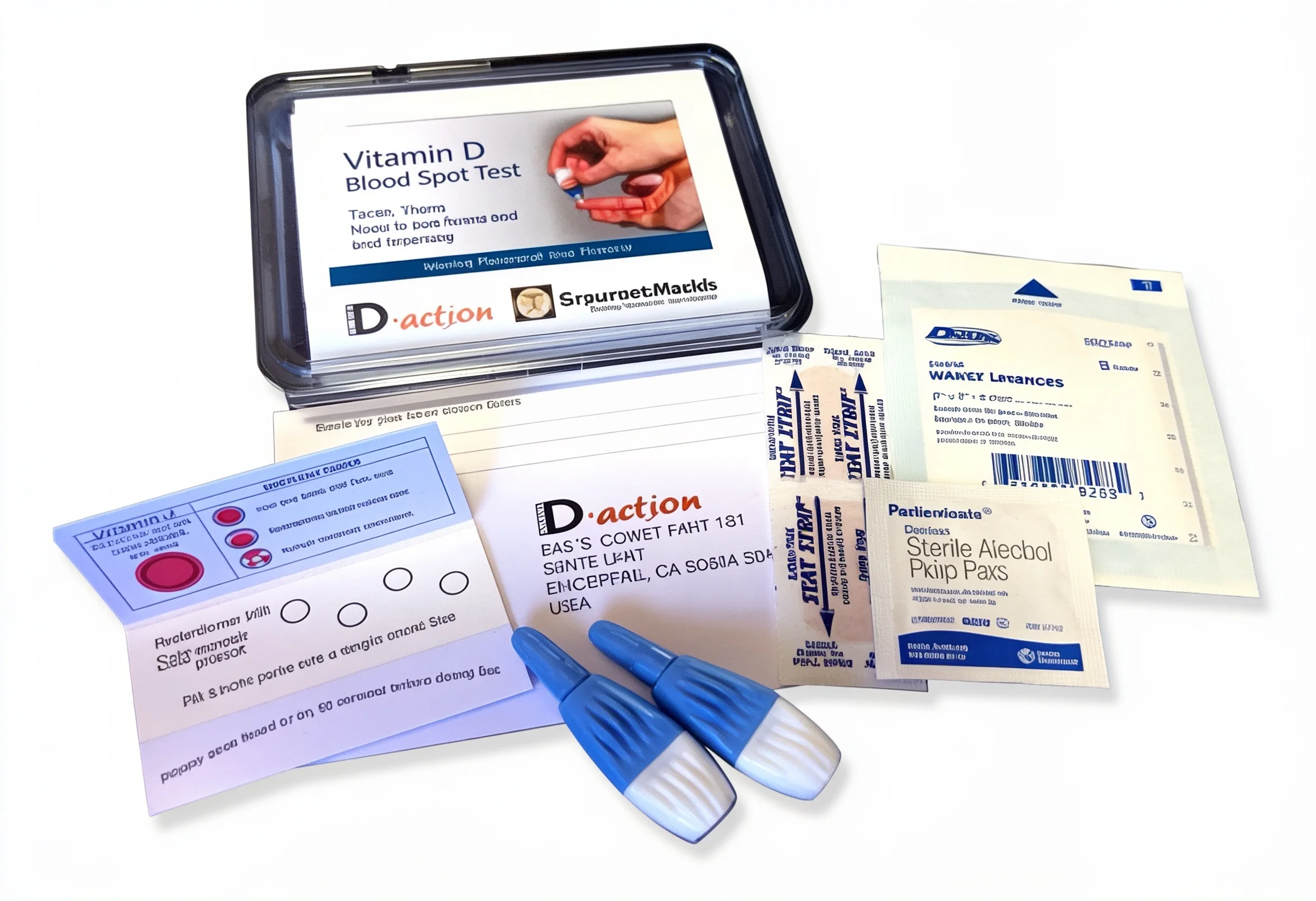
Order your at-home blood spot test kit to measure vitamin D and other nutrients of concern to you, such as omega-3s, magnesium, essential and toxic elements (zinc, copper, selenium, lead, cadmium, mercury); include hsCRP as a marker of inflammation or HbA1c for blood sugar health
Step 2
Join the Study
Answer the online questionnaire as part of the GrassrootsHealth study
Step 3
Review Your Results
Using our educational materials and tools (such as our dose calculators), assess your results to determine if you are in your desired target range or if actions should be taken to get there
Step 4
Retest & Track Progress
After 3-6 months of implementing your changes, re-test to see if you have achieved your target level(s)