Following findings from earlier this month on vitamin D, abdominal fat, and mortality, another study helps reveal how inflammation may fit into the picture to affect heart health
Key Points
- Higher body fat, vitamin D deficiency, and elevated hsCRP each independently predicted a greater risk of major cardiovascular events.
- Elevated hsCRP, a marker of chronic low-grade inflammation, showed the strongest association with cardiovascular events, with nearly three times the risk.
- Inflammation accounted for 21% of the link between excess body fat and cardiovascular risk among those with vitamin D deficiency, compared to just 7% among those with higher vitamin D levels.
- Testing vitamin D and hsCRP together can provide valuable insight into two important, modifiable factors associated with inflammation and cardiovascular health.

Earlier this week, we shared new research by Milliati et al. involving more than 5,500 adults over age 50. The study found that vitamin D deficiency alone was associated with a greater risk of death than abdominal obesity alone, and having both vitamin D deficiency and abdominal obesity more than doubled the risk of death.
Abdominal obesity alone was associated with a 47% increased risk, compared to as much as a 91% increase with vitamin D deficiency. When both were present, the risk increased by 123%.
The researchers pointed specifically to chronic inflammation as one possible link between these two conditions and their combined effect on health. Below, we feature another new study that provides important insight into that connection and highlights another blood marker measuring inflammation: high-sensitivity C-reactive protein, or hsCRP.
Vitamin D, Body Fat and Inflammation Each Predicted Cardiovascular Events
The prospective study by Bennouar et al. followed 1,828 adults without previous cardiovascular disease for approximately 4.5 years. Researchers measured three important markers at baseline:
- body fat percentage
- vitamin D as serum 25(OH)D
- hsCRP, a marker of chronic low-grade inflammation
During follow-up, 233 participants experienced a major adverse cardiovascular event (MACE). The researchers found that higher body fat, higher hsCRP, and severe vitamin D deficiency each independently predicted cardiovascular events.
Of the three, elevated hsCRP showed the strongest association with cardiovascular events, with nearly three times the risk.
Higher Vitamin D Was Linked to a Much Smaller Inflammatory Contribution to Cardiovascular Risk
Excess body fat can promote chronic low-grade inflammation, which in turn contributes to cardiovascular disease, and also contributes to a higher risk of vitamin D deficiency. To gain additional clarity on the relationship, the researchers calculated how much of the association between excess body fat and cardiovascular events could be explained by inflammation alone and then examined whether that relationship changed according to vitamin D status.
Among those with vitamin D deficiency, inflammation accounted for approximately 21% of the association between excess body fat and cardiovascular events. At average vitamin D levels, it accounted for about 15%. At higher vitamin D levels, that dropped to just 7%.
In other words, as vitamin D status increased, the contribution of inflammation to the relationship between body fat and cardiovascular risk became progressively smaller.
Importantly, higher vitamin D did not eliminate the cardiovascular risk associated with excess body fat. Rather, vitamin D status appeared to modify the pathway between inflammation and cardiovascular events. The authors concluded that correcting vitamin D deficiency could potentially serve as an additional strategy for people with obesity, while emphasizing that randomized trials are needed to determine whether improving vitamin D status actually causes a reduction in cardiovascular events.
How Should You Interpret These Latest Findings?
Taken together, these two studies raise an important possibility. The research by Milliati et al. showed that vitamin D deficiency and abdominal obesity may be particularly harmful when they occur together, with researchers highlighting chronic inflammation as a possible contributor.
This new study helps fill in another piece of that picture:
body fat, vitamin D deficiency, and inflammation were each independently associated with cardiovascular risk, and the inflammatory pathway connecting body fat to cardiovascular events was substantially stronger at lower vitamin D levels.
That makes inflammation itself something worth paying attention to!
What is hsCRP and Why Should You Know Your Level?
C-reactive protein (CRP) is produced primarily by the liver in response to inflammation. A high-sensitivity CRP (hsCRP) test can detect much smaller elevations in CRP and is commonly used to assess chronic, low-grade inflammation associated with cardiovascular risk. Unlike symptoms that may alert you to an acute inflammatory response, chronic low-grade inflammation can exist without being obvious.
An hsCRP test provides another piece of information about what may be happening inside the body. This is particularly relevant given the findings of the new study: hsCRP was not simply associated with excess body fat, it independently predicted major cardiovascular events.
GrassrootsHealth offers both vitamin D and hsCRP testing as part of our home blood spot testing options, making it easy to measure and track these important markers together.
Measure your vitamin D and hsCRP levels today, or consider the Inflammation Panel for even more health insight.
Order the Inflammation Panel Test Kit
Measuring Your Level is Important… Are You Getting Enough Vitamin D?
The only way to know is to test your levels! Testing versus blind supplementation is essential to know for sure if what you are taking is the right amount for you. Once you test your vitamin D (and other levels) to know where you are NOW, you can account for any upcoming changes in lifestyle over the coming months and adjust your intake to reach (or maintain) your targets.
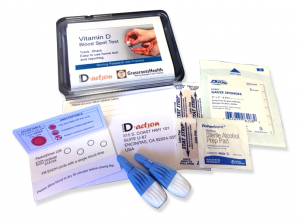 Measure your:
- Vitamin D
- Magnesium PLUS Elements
- Omega-3 Fatty Acids
- hsCRP
- HbA1c
- TSH
- Type 1 Diabetes Autoantibodies
Did you know that each of the above can be measured at home using a simple blood spot test? As part of our ongoing research project, you can order your home blood spot test kit to get your levels, followed by education and steps to take to help you reach your optimal target levels. Start by enrolling and ordering your kit to measure each of the above important markers, and make sure you are getting enough of each to support better mood and wellbeing!
Create your custom home test kit today. Take steps to improve the status of each of these measurements to benefit your overall health. With measurement you can then determine how much is needed and steps to achieve your goals. You can also track your own intakes, symptoms and results to see what works best for YOU.