

With Dr. Michael Holick, a Pioneer in Vitamin D Research
Key Points
- Dr. Michael Holick explains why current vitamin D recommendations often fall short of achieving healthy vitamin D levels for many individuals.
- Clinical evidence supports personalized vitamin D dosing based on factors such as age, body weight, pregnancy, and individual vitamin D status—not a one-size-fits-all recommendation.
- Research presented during the discussion highlights the benefits of maintaining vitamin D levels above 30 ng/mL, with many health outcomes optimized in the 40–60 ng/mL range.
- From pregnancy and obesity to bone health, immune function, diabetes, and longevity, decades of research suggest that vitamin D guidelines should evolve to better reflect today’s scientific evidence.
 GrassrootsHealth was privileged to welcome Dr. Michael Holick as one of the featured speakers during our Vitamin D Dosing Policy Update: An Expert Panel Discussion on May 21, 2026. For more than five decades, Dr. Holick has been one of the world’s leading authorities on vitamin D, helping shape our understanding of its role in bone health, immune function, chronic disease prevention, and overall human health.
As Chair of the Endocrine Society’s 2011 Clinical Practice Guideline Committee, Dr. Holick played a central role in developing evidence-based recommendations for the prevention and treatment of vitamin D deficiency. During this presentation, he offered a historical perspective on how current vitamin D guidelines evolved, highlighted important shortcomings in today’s recommendations, and reviewed decades of scientific evidence supporting higher vitamin D intakes and levels than those currently recommended for much of the population.
We are grateful to Dr. Holick for his decades of scientific leadership and for sharing his expertise as part of this important policy discussion. Watch Dr. Michael Holick’s complete presentation below or continue reading for a detailed summary of his presentation. You can view the full 3 ½ hour policy discussion recording here.
Watch Now
Looking Back at How We Got Here
Dr. Holick began his presentation by taking the audience back to the Institute of Medicine’s (IOM) landmark 2010 vitamin D recommendations. At the time, many people viewed the report as a major advancement. The IOM acknowledged that the previous recommendation of 200 IU per day was inadequate and increased the Recommended Dietary Allowance (RDA) to 600 IU per day for most adults. They also recognized that 2,000 IU per day was not toxic and increased the Tolerable Upper Intake Level (UL) to 4,000 IU per day.
For many nutrients, such dramatic increases would be extraordinary. However, the real question wasn’t whether the recommendations improved; they clearly had. The real question was: Did they go far enough?
Population Guidance Is Not the Same as Patient Care
One of the central themes of the presentation was the distinction between public health recommendations and clinical medicine. He reminded viewers that the 2010 Institute of Medicine recommendations were never intended to guide physicians treating patients. Instead, they were developed as population-based nutrition recommendations.
Recognizing this limitation, the Endocrine Society convened a panel of vitamin D experts in 2011, which included Dr. Holick, to develop guidelines specifically for the prevention and treatment of vitamin D deficiency. Those recommendations differed substantially from those of the IOM.
Rather than recommending 600 IU daily for nearly everyone, the Endocrine Society advised:
- Infants: 400–1,000 IU/day
- Children: 600–1,000 IU/day
- Adults: 1,500–2,000 IU/day
- Individuals with obesity: two to three times higher doses to achieve the same blood level
The Endocrine Society also concluded that 10,000 IU/day represented a safe upper intake level for teenagers and adults, based on the available scientific evidence.
Why the New 2024 Guidelines Created Confusion
Dr. Holick then turned to the 2024 Endocrine Society guideline, explaining that many clinicians misunderstood its purpose. The panel developing those recommendations made an important assumption from the outset: they considered a generally healthy population that was already vitamin D sufficient. Because of that assumption, the guideline largely defaulted to the IOM’s recommendation of approximately 600 IU/day for most adults.
Here lies an important contradiction… Although the guideline recognized evidence supporting higher vitamin D intakes for specific situations, including pregnancy, respiratory infections, and prediabetes, it still did not recommend higher routine intakes for many of these groups because of its original population-based framework.
This has created considerable confusion among clinicians attempting to apply population guidance to individual patient care.
Vitamin D Deficiency Remains a Global Public Health Problem
Vitamin D deficiency is far from rare; approximately 40% of the world’s population is vitamin D deficient, while another 60% is vitamin D insufficient. Data from the United States are equally concerning. National surveys indicate that fewer than half of Americans have sufficient vitamin D levels, and among adolescents and young adults, only about one-third are vitamin D sufficient.

Despite these statistics, Recommendation 12 of the 2024 guideline suggests against routine vitamin D screening in healthy adults. For Dr. Holick, this recommendation raises an obvious question: If deficiency is so widespread, how can it be addressed without measuring it?
Pregnancy: One of Vitamin D’s Greatest Opportunities
Pregnancy is one of the clearest examples where higher vitamin D status can improve health outcomes, as reviewed in greater detail by following Policy Discussion presentations. Drawing on research conducted with Dr. Lisa Bodnar and others, he explained that higher maternal vitamin D concentrations are associated with lower risks of preeclampsia. Additional research by GrassrootsHealth has shown approximately a 60% reduction in premature birth when maternal vitamin D concentrations exceed 40 ng/mL.
While Dr. Holick enthusiastically applauded the 2024 guideline for recognizing these benefits and recommending vitamin D supplementation during pregnancy, yet another contradiction remained.
Although the guideline acknowledged that higher vitamin D intakes improve pregnancy outcomes, its general recommendation still defaulted to 600 IU/day, a level that may be insufficient for many pregnant women to achieve optimal vitamin D status.
As Dr. Holick summarized, the evidence supporting improved birth outcomes is already available. The recommendations simply have not fully reflected it.
Obesity Changes Vitamin D Requirements
Vitamin D becomes diluted within a larger body mass, meaning individuals with obesity generally require substantially more vitamin D to achieve the same blood concentration. Citing work by Ekwaru and colleagues, Dr. Holick explained that individuals with obesity often require 2.5 times more vitamin D than those of normal weight.
This evidence formed the basis for the 2011 Endocrine Society’s recommendation that adults with obesity receive two to three times more vitamin D than standard recommendations. Yet, despite this well-established relationship, the 2024 guideline makes no specific dosing recommendation for obesity and recommends against routine vitamin D screening in this population. For clinicians caring for patients with obesity, this represents another important disconnect between the scientific evidence and current recommendations.
Revisiting the Bone Health Evidence
In the opening policy discussion presentation, Dr. James Lyons-Weiler explained one of the statistical mistakes made by the IOM when calculating their RDA. In his presentation, Dr. Holick addressed another mistake made by the IOM when examining bone biopsies used to establish their recommendations. In fact, both the IOM and the Endocrine Society reviewed the same study, yet they reached very different conclusions.
The IOM concluded that serum 25(OH)D concentrations above 20 ng/mL were sufficient for nearly everyone. However, Dr. Holick explained that this conclusion resulted from the way the data were analyzed. Rather than examining the proportion of individuals between 20 and 30 ng/mL who actually had osteomalacia, the IOM compared those cases with the entire study population, substantially underestimating the frequency of vitamin D deficiency-related bone disease.
When the analysis is performed correctly, approximately 22% of otherwise healthy adults with 25(OH)D concentrations between 20 and 30 ng/mL demonstrated evidence of osteomalacia, while none of the individuals with concentrations above 30 ng/mL showed evidence of the disease. These findings supported the Endocrine Society’s conclusion that 30 ng/mL should be considered the minimum level for vitamin D sufficiency, with 40–60 ng/mL representing a preferred target for many individuals because of assay variability and broader health benefits.

“Don’t think about a normal level. Think about a healthy level.”
Vitamin D Is Safer Than Many People Realize at Higher Intakes
Another persistent misconception is the fear of vitamin D toxicity. Dr. Holick reviewed research demonstrating that 10,000 IU/day has been shown to be safe in healthy adults. Additional long-term observations involving more than 22,000 measurements found no evidence of toxicity even among individuals consuming approximately 20,000 IU/day, with average vitamin D levels around 60 ng/mL.
These findings, he emphasized, provide reassurance that achieving vitamin D concentrations commonly associated with improved health outcomes can be accomplished safely when appropriately monitored.
Evidence Across Multiple Diseases
There are now many examples illustrating vitamin D’s importance beyond skeletal health, a few of which were reviewed by Dr. Holick. During the COVID-19 pandemic, analysis of more than 190,000 patient samples demonstrated that individuals with 25(OH)D concentrations of at least 34 ng/mL were substantially less likely to test positive for COVID-19. Among hospitalized patients, vitamin D sufficiency was associated with markedly lower mortality, including a 67% reduction in overall odds of death.
The D2d trial of diabetes prevention, on further analysis, revealed that participants who achieved vitamin D levels of at least 50 ng/mL experienced a 76% reduction in progression from prediabetes to diabetes compared with those whose levels remained between 20 and 29 ng/mL.
Work by Dr. Cedric Garland and others has consistently shown that mortality risk declines as vitamin D levels rise, with many of the greatest benefits occurring around 40–50 ng/mL; levels that typically require approximately 4,000–5,000 IU/day for many adults to achieve.
“You cannot get enough vitamin D from your diet.”
Dr. Holick’s Take-Home Message
As he brought his presentation to a close, Dr. Holick reminded the audience that vitamin D deficiency remains one of the most common and overlooked nutritional problems worldwide.
He emphasized that blood levels, not simply dietary intake, should guide clinical decision-making.
His final message was both simple and powerful:
“Vitamin D deficiency is a disease of neglect.”
And perhaps the most memorable conclusion of all:
“Adequate vitamin D is critically important from birth until death. Vitamin D can help improve your health.”
Looking Ahead
Dr. Holick’s presentation reinforced an important theme that emerged throughout the May 21 policy discussion: while our scientific understanding of vitamin D has advanced dramatically over the past several decades, many public health recommendations have not kept pace. His review of the evidence demonstrates that individualized dosing, appropriate testing, and maintaining healthy, not merely “adequate,” vitamin D levels are essential components of modern clinical care.
In the next presentation in this series, which we will summarize for you shortly, Dr. Sunil Wimalawansa explores the fundamental biology of vitamin D, explaining why vitamin D functions far beyond bone health and why understanding its physiology is essential for developing effective public health policy.
About Dr. Michael F. Holick
Michael F. Holick, PhD, MD is Professor of Medicine, Physiology, Biophysics, and Molecular Medicine at Boston University Chobanian & Avedisian School of Medicine and Director of the Bone Health Care Clinic at Boston Medical Center. Internationally recognized as one of the world’s leading vitamin D researchers, Dr. Holick discovered the major circulating form of vitamin D, 25-hydroxyvitamin D, and has spent more than five decades advancing the science of vitamin D metabolism, deficiency, and clinical applications. He chaired the Endocrine Society’s landmark 2011 Clinical Practice Guideline on the evaluation, treatment, and prevention of vitamin D deficiency and has authored more than 600 scientific publications, numerous textbooks, and several books for both healthcare professionals and the public. His research has profoundly influenced the understanding of vitamin D’s role in bone health, immune function, pregnancy, chronic disease prevention, and overall health worldwide.
A Call to Action from Executive Director, Jen Aliano
Please help get this important discussion into the hands of the people who can make a difference.
Our goal is to encourage policymakers, public health leaders, medical organizations, and guideline committees to review the evidence presented by this panel of leading vitamin D experts and consider updating vitamin D policies and clinical guidelines to better reflect the current science.
If you know anyone involved in health policy, public health, government, healthcare leadership, medical societies, or guideline development, please share this presentation with them. Even one introduction or one share could help move this conversation forward.
The easiest ways to help are:
- Share the GrassrootsHealth blog about the discussion (includes built-in social sharing buttons):
https://www.grassrootshealth.net/blog/leading-experts-call-for-changes-to-vitamin-d-policy-watch-the-discussion/ - Repost or share the GrassrootsHealth social media posts on
LinkedIn
X.com
Facebook - Share the YouTube recording directly
Thank you for helping us bring the latest vitamin D science to those in a position to improve public health policy,
Jen Aliano, MS
Executive Director, GrassrootsHealth
Are You Getting Enough Vitamin D & Other Health Boosting Nutrients?
Measuring our levels of vitamin D and other important nutrients and health markers can be considered one way to check-in with our health status and guide us towards the steps to take next in improving and supporting our health.
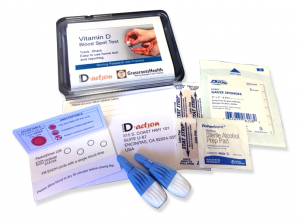 Having and maintaining healthy vitamin D levels and other nutrient levels can help improve your health now and for your future. Choose which to measure, such as your vitamin D, omega-3s, and essential minerals including magnesium and zinc, by creating your custom home test kit today. Take steps to improve the status of each of these measurements to benefit your overall health. You can also track your own intakes, symptoms and results to see what works best for YOU.
Enroll and test your levels today, learn what steps to take to improve your status of vitamin D (see below) and other nutrients and blood markers, and take action! By enrolling in the GrassrootsHealth projects, you are not only contributing valuable information to everyone, you are also gaining knowledge about how you could improve your own health through measuring and tracking your nutrient status, and educating yourself on how to improve it.