
A new systematic review brings together decades of research showing how vitamin D acts directly within the brain and influences pathways involved in mood, memory, neuroprotection, inflammation, brain development and healthy cognitive aging
Key Points
- Vitamin D acts directly within the brain, influencing multiple pathways involved in mood, memory, neuroprotection, inflammation, brain development, and healthy cognitive aging.
- Higher concentrations of vitamin D measured directly in human brain tissue were associated with better cognitive function and a 25–33% lower risk of dementia or mild cognitive impairment.
- Vitamin D supports brain health through its effects on serotonin and dopamine, neuroplasticity and nerve growth, antioxidant protection, inflammation, calcium regulation, and amyloid-beta clearance.
- A new systematic review of 90 studies reinforces the broad importance of vitamin D to brain health, with low vitamin D status associated with cognitive decline, depression, and multiple neurological and neuropsychiatric conditions.

Just as many other types of tissues and organs throughout the body, the brain itself is equipped to respond to vitamin D3, convert and activate it locally, and use it to regulate processes involved in the health and function of local cells (neurons).
One particularly fascinating study by Shea et al., previously covered by GrassrootsHealth, measured vitamin D and its metabolites in brain tissue from 290 individuals who had participated in the Rush Memory and Aging Project before their deaths. Higher concentrations of 25-hydroxyvitamin D3 [25(OH)D3] within the brain were associated with a 25–33% lower risk of dementia or mild cognitive impairment at death. Higher brain vitamin D concentrations were also associated with better overall cognitive function, slower cognitive decline, and better working and semantic memory during life.
A new 2026 systematic review by Barakat et al. brings together evidence from 90 studies examining vitamin D and brain health, helping explain why findings such as those from Shea et al. are biologically plausible.
Vitamin D Affects Brain Health Via Multiple Pathways
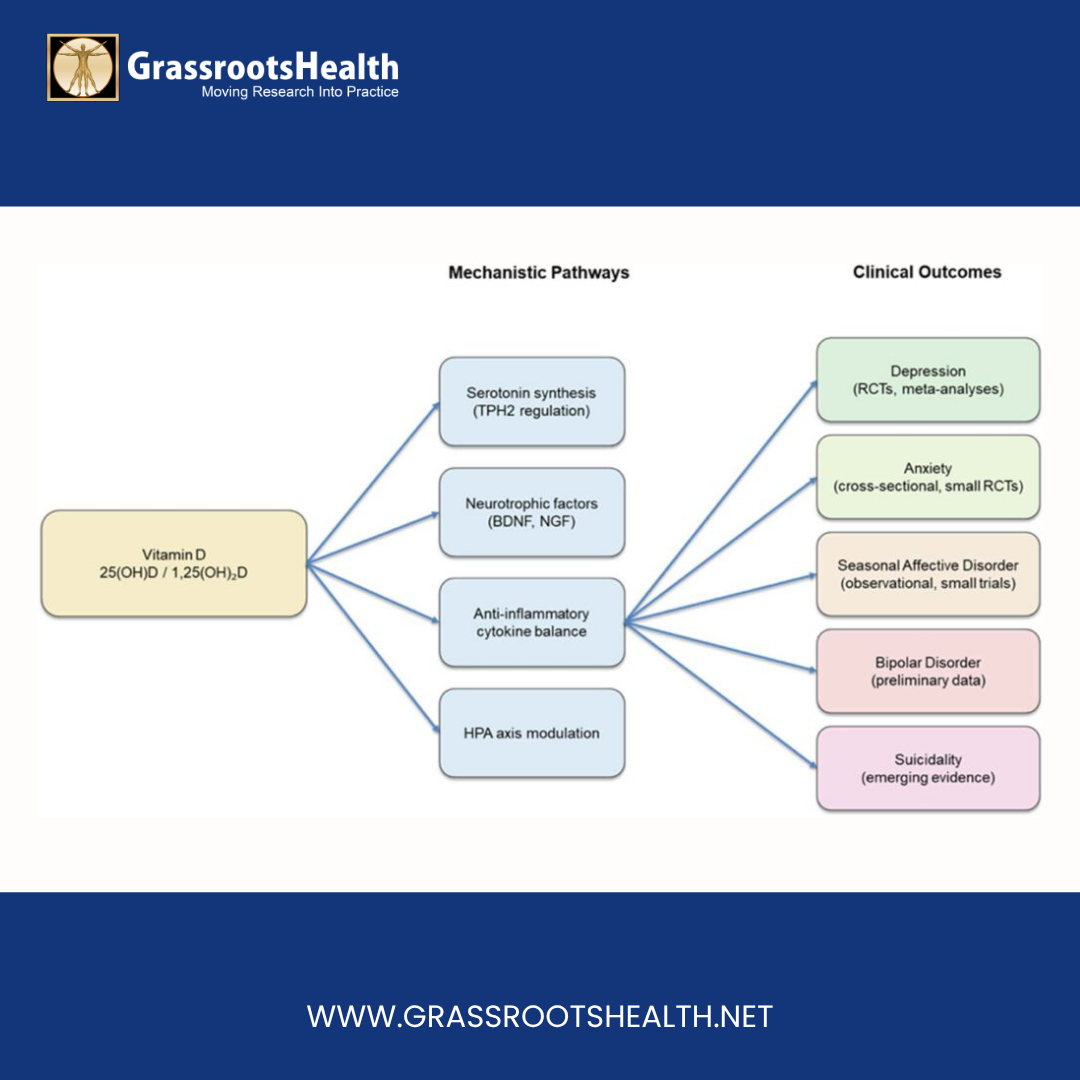
Vitamin D’s effects on the brain occur through many different pathways, simultaneously influencing neurotransmitter production, inflammation, antioxidant protection, neuroplasticity, neuronal survival, stress responses and other processes. The above diagram illustrates several of the pathways through which vitamin D may influence brain and mental health, including serotonin synthesis, neurotrophic factors such as BDNF and NGF, anti-inflammatory cytokine balance, and regulation of the hypothalamic-pituitary-adrenal (HPA) axis.
Vitamin D Acts Directly in the Brain
Vitamin D receptors (VDRs) and the enzymes involved in vitamin D activation are found throughout the human brain. Research has identified them in neurons as well as glial cells, the cells that provide structural and immune support within the nervous system. VDRs are present in regions involved in some of our most essential neurological functions, including:
- Hippocampus: learning, memory and neuroplasticity
- Prefrontal cortex: decision-making, executive function and behavior
- Amygdala: emotion and stress responses
- Hypothalamus: sleep, temperature, appetite, hormones and other autonomic functions
- Substantia nigra: dopamine production, movement and reward pathways
The presence of both the vitamin D receptor and vitamin D-activating enzyme within the brain indicates that brain tissue is not simply exposed to vitamin D circulating in the blood; it has the machinery necessary to produce and respond to active vitamin D locally.
What Does Vitamin D Do in the Brain?
Once activated, vitamin D binds to the vitamin D receptor, which can then influence gene expression. Through these and other signaling mechanisms, vitamin D affects several processes necessary for healthy brain function.
Supports Neurotransmitters
- Vitamin D influences pathways involved in the synthesis of neurotransmitters, including serotonin and dopamine.
- These chemical messengers influence mood, motivation, attention, emotional regulation, executive function and behavior.
- This is one reason vitamin D continues to be studied in relation to depression, anxiety, seasonal affective disorder, ADHD, autism and other neuropsychiatric conditions.
Promotes Brain Growth, Repair and Neuroplasticity
- Vitamin D influences neurotrophic factors such as brain-derived neurotrophic factor (BDNF), nerve growth factor (NGF), and glial cell line-derived neurotrophic factor (GDNF).
- These compounds help neurons survive, grow, communicate and form new connections.
- Within the hippocampus in particular, vitamin D-related signaling is associated with neurogenesis and neuroplasticity; processes that are essential to learning and memory.
Helps Protect Brain Cells
- Brain cells are particularly vulnerable to oxidative stress. Vitamin D supports antioxidant pathways that help protect neurons against oxidative damage and promotes neuronal survival.
- The new review also highlights vitamin D’s role in calcium regulation. Maintaining appropriate calcium signaling within neurons is critical because excessive intracellular calcium can contribute to neuronal dysfunction and cell death.
Helps Control Neuroinflammation
- Chronic inflammation within the brain is increasingly recognized as an important contributor to neurological and neuropsychiatric disease.
- Vitamin D can influence immune cells within the brain, including microglia and astrocytes, and suppress inflammatory signaling pathways such as NF-κB. This can reduce production of inflammatory cytokines including IL-6 and TNF-α.
- These anti-inflammatory actions may be especially important in conditions characterized by chronic neuroinflammation, including Alzheimer’s disease and multiple sclerosis.
May Help the Brain Clear Damaging Proteins
- Vitamin D also appears to influence mechanisms involved in amyloid-beta metabolism and clearance.
- Abnormal accumulation of amyloid-beta plaques is one of the characteristic pathological features associated with Alzheimer’s disease. Vitamin D may support the brain’s ability to clear these proteins while also reducing oxidative stress and inflammation.
What Did the New Study Find?
Across the evidence reviewed, low vitamin D status was associated with a wide range of neurological and neuropsychiatric outcomes, including:
- Cognitive decline and dementia
- Depression and other mood disorders
- Anxiety
- Autism spectrum disorder
- ADHD
- Schizophrenia
- Parkinson’s disease
- Multiple sclerosis
- Other neurodegenerative and neurological disorders
The strength of the evidence was not identical for every condition, and association does not necessarily demonstrate that vitamin D deficiency caused the condition. However, taken together, the findings reinforce vitamin D’s broad biological relevance throughout the nervous system.
Vitamin D and Cognitive Decline
Across prospective studies, lower vitamin D levels have been associated with faster declines in memory and executive function and a greater risk of dementia. Meta-analyses have similarly found a higher risk of Alzheimer’s disease among vitamin D-deficient older adults.
Some supplementation trials involving people with mild cognitive impairment have reported stabilization or modest improvements in memory or global cognition, although results from large prevention trials in the general population have been less consistent.
Vitamin D and Mood
The new review also found substantial evidence linking vitamin D with depression. Observational studies consistently associate lower vitamin D status with a greater likelihood of depression, while an umbrella meta-analysis of randomized controlled trials found that vitamin D supplementation was associated with a moderate reduction in depressive symptoms. Benefits appeared to be particularly evident among individuals who started with vitamin D deficiency.
Research involving brain imaging has added another interesting layer. In one randomized trial involving patients with major depressive disorder, symptom scores did not differ significantly between vitamin D and placebo groups. However, declines in white-matter integrity and functional brain connectivity were observed in the placebo group but not in the vitamin D group, raising the possibility that vitamin D may help preserve aspects of brain network integrity even when immediate symptom changes are not apparent.
The Effects of Vitamin D Begin Early in Life
One of the strongest messages from the review is that vitamin D’s role in the brain begins long before old age. Vitamin D participates in neuronal differentiation, axonal growth, synapse formation and other processes necessary for healthy brain development.
According to the authors’ evaluation of the available evidence, some of the strongest and most consistent associations involved neurodevelopmental conditions and vitamin D status during pregnancy and early life.
Research has linked lower maternal or neonatal vitamin D status with increased risk of autism spectrum disorder, ADHD and schizophrenia, although the strength and consistency of those associations vary among conditions and studies.
Your Vitamin D Levels Affect Your Brain’s Health
Your vitamin D status is an easily modifiable health factor, influencing inflammation, neurotransmitter production, genes regulation and neuronal function. It supports neuroplasticity and antioxidant defenses, and, as the Shea study demonstrated, the amount of vitamin D actually present within human brain tissue is associated with cognitive function.
This review concludes that the convergence of epidemiological, clinical and mechanistic research supports a meaningful relationship between vitamin D status and brain health.
Are You Getting Enough Vitamin D and Other Key Brain Nutrients?
Besides vitamin D, omega-3 fatty acids and B vitamins are additional key nutrients for keeping your brain healthy. Maintaining a healthy blood sugar level and keeping levels of inflammation low have also shown been to greatly reduce the risk of several diseases associated with the brain and nervous system. Measure each of these markers when ordering the Cognitive Health Test Kit from GrassrootsHealth.
Order Your Cognitive Health Test Kit Now
Are You Getting Enough Vitamin D for Your Brain?
The only way to know is to test your levels! Testing versus blind supplementation is essential to know for sure if what you are taking is the right amount for you. Once you test your vitamin D (and other levels) to know where you are NOW, you can account for any upcoming changes in lifestyle over the coming months and adjust your intake to reach (or maintain) your targets.
Order thru CheckYourD.org (Only $65)
Measure as a Participant in the D*action Study
 Having and maintaining healthy vitamin D levels and other nutrient levels can help improve your health now and for your future. Choose which additional nutrients to measure, such as your omega-3s and essential minerals including magnesium and zinc, by creating your custom home test kit today. Take steps to improve the status of each of these measurements to benefit your overall health. With measurement you can then determine how much is needed and steps to achieve your goals. You can also track your own intakes, symptoms and results to see what works best for YOU.