GrassrootsHealth to honor pioneering researchers November 2 in San Diego as millions enter the “vitamin D winter,” when sunlight across much of the U.S. no longer provides enough UVB for the skin to make vitamin D.
Key Points
- GrassrootsHealth will honor pioneering vitamin D researchers Drs. Edward D. Gorham, William B. Grant, and Joan M. Lappe on World Vitamin D Day, November 2, 2026, in San Diego.
- Decades of research have revealed important associations between sunlight, UVB exposure, vitamin D status, and cancer risk, advancing scientific understanding of cancer prevention.
- As millions enter the “vitamin D winter,” GrassrootsHealth encourages individuals to check their seasonal UVB availability, know their vitamin D blood levels, and practice sensible sun exposure.
 SAN DIEGO, CA / October 27, 2026 — On World Vitamin D Day, November 2, 2026, GrassrootsHealth will honor Drs. Edward D. Gorham, William B. Grant, and Joan M. Lappe at the inaugural Baggerly-Garland Awards Conference in San Diego, California, recognizing decades of research linking sunlight, UVB, and cancer prevention.
The event comes as millions of Americans enter the “vitamin D winter,” when seasonal reductions in UVB irradiance can make it difficult or impossible for the skin to produce meaningful amounts of vitamin D.
What does sunlight have to do with cancer prevention? In the 1970s, brothers Drs. Cedric and Frank Garland noticed that people living in less sunny regions of the United States had substantially higher death rates from certain cancers than those living in sunnier regions. That observation, preceded by a little-known 1941 geographic study by Dr. Frank L. Apperly, helped launch decades of scientific investigation into sunlight, ultraviolet B (UVB) irradiance, vitamin D, and their possible beneficial role in preventing internal cancers.
The Garland brothers hypothesized that sunlight exposure, and particularly vitamin D produced in the skin through UVB irradiance, might help explain these differences. Their landmark 1980 publication, Do Sunlight and Vitamin D Reduce the Likelihood of Colon Cancer?, introduced a hypothesis that would influence decades of cancer prevention research to follow.
From Latitude to Air Pollution and Cancer

Dr. Edward D. Gorham joined the brothers in expanding this investigation. In a 1989 study of 20 Canadian cities, Gorham and colleagues found that breast cancer mortality was approximately 50% higher and colon cancer mortality twice as high in cities with the greatest levels of sulfate air pollution compared to those with the lowest levels.
The researchers proposed that atmospheric pollution could reduce biologically effective UVB reaching the ground, potentially limiting vitamin D production. Gorham’s subsequent research across the former Soviet Union identified higher breast cancer rates in northern regions and industrial areas receiving less sunlight.
In reflection, Gorham stated, “Working with Drs. Frank and Cedric Garland changed my life. From our earliest acquaintance, we realized how much cancer we could actually prevent, and that public health and vitamin D research was the best approach to doing so.”
Expanding the Research Across Multiple Cancers
 Building on this foundation, Dr. William B. Grant brought expertise in physics, atmospheric science, and epidemiology to the investigation. In 2002, Grant published research identifying additional cancers whose mortality rates were inversely associated with solar UVB exposure. His subsequent research with Dr. Cedric Garland examined whether smoking, diet, and other factors could explain these associations.
“I came to vitamin D research from physics and atmospheric science, where I learned to study patterns in complex systems. I later applied that ecological approach to understanding how sunlight, vitamin D, and other factors influence disease risk,” said Grant.
 Two randomized controlled clinical trials performed by Dr. Joan M. Lappe, along with the late Dr. Robert P. Heaney (1927-2016) and others at Creighton University, advanced understanding of the role of vitamin D in preventing cancer (https://doi.org/10.1093/ajcn/85.6.1586, https://doi.org/10.1001/jama.2017.2115). A later reanalysis of VITAL, a large randomized trial led by Harvard-affiliated researchers, found fewer metastatic and fatal cancers among participants taking vitamin D.
Together, these researchers advanced investigations into whether insufficient sunlight-derived vitamin D contributes to preventable cancer risk. While observational studies alone cannot establish causation, laboratory research and studies measuring serum vitamin D metabolites have provided additional supportive evidence.
Vitamin D Winter: Will Your Sunlight Be Enough?
Not all sunshine produces vitamin D. At approximately 37°N latitude and above, winter sunlight may contain insufficient UVB for meaningful vitamin D production, particularly November through February. Affected cities include San Francisco, Denver, St. Louis, Washington, D.C., New York City, Chicago, and Boston. Research in Boston (42°N) found no detectable previtamin D3 production during these months under study conditions, even on cloudless days.
GrassrootsHealth encourages everyone to take action this World Vitamin D Day:
1. Learn whether you are entering vitamin D winter. Check your seasonal UVB availability to understand when sunlight can support vitamin D production using the free D-Minder app. For maps showing how vitamin D-producing UVB varies by location and season, visit the free TEMIS Vitamin D UV Dose archive.
2. Know your vitamin D level. A serum 25-hydroxyvitamin D [25(OH)D] blood test can help you assess your status and consider appropriate options, including sensible sun exposure, diet, supplementation, or FDA-cleared personalized UVB light therapy.
3. Practice sensible sun exposure. Get regular, brief sun exposure when UVB is available, and avoid sunburn by using clothing, a wide-brimmed hat, or mineral-based broad-spectrum sunscreen for longer periods outdoors.
Attend the News Conference to Honor the Scientists Who Advanced the Research
The inaugural Baggerly-Garland Awards honor two influential figures: Dr. Frank C. Garland (1950–2010), a pioneering cancer epidemiologist, and Carole Baggerly (1942–2024), who founded GrassrootsHealth in 2007 to move vitamin D research into practice following her personal experience with breast cancer.
The 2026 awards recognize:
- Dr. Edward D. Gorham, for groundbreaking epidemiological research on sunlight, UVB, atmospheric pollution, and cancer.
- Dr. William B. Grant, for extensive research on solar UVB, vitamin D, and geographic patterns of cancer and other diseases.
- Dr. Joan M. Lappe, for pioneering randomized clinical trials investigating vitamin D, calcium, and cancer prevention.
The awards are sponsored by Solius Labs in cooperation with GrassrootsHealth and the Helen Knoll Foundation.
Journalists, researchers, healthcare professionals, cancer advocates, media, and concerned members of the public are invited to attend.
Date: Monday, November 2, 2026, 11:00 AM Pacific, 2:00 PM Eastern Time
Location: UC San Diego Cancer Center, Goldman Auditorium, 3855 Health Sciences Drive, La Jolla, California 92037
Attendance: In person or virtually
About GrassrootsHealth
GrassrootsHealth is a 501(c)(3) nonprofit public-health research organization advancing vitamin D research, education, and advocacy through evidence-based resources, testing, and practical tools.
About the Helen Knoll Foundation
The Helen Knoll Foundation empowers young women through breast-health education and prevention, partnering with GrassrootsHealth to expand access to evidence-based resources.
###
Media Contact
Jen Aliano, Executive Director
GrassrootsHealth
jen@grassrootshealth.org
Measuring Your Level is Important… Are You Getting Enough Vitamin D?
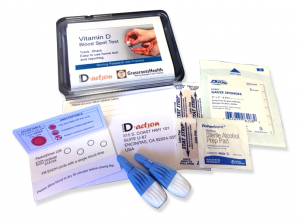
The only way to know is to test your levels! Testing versus blind supplementation is essential to know for sure if what you are taking is the right amount for you. Once you test your vitamin D (and other levels) to know where you are NOW, you can account for any upcoming changes in lifestyle over the coming months and adjust your intake to reach (or maintain) your targets.
 Measure your:
- Vitamin D
- Magnesium PLUS Elements
- Omega-3 Fatty Acids
- hsCRP
- HbA1c
- TSH
- Type 1 Diabetes Autoantibodies
Did you know that each of the above can be measured at home using a simple blood spot test? As part of our ongoing research project, you can order your home blood spot test kit to get your levels, followed by education and steps to take to help you reach your optimal target levels. Start by enrolling and ordering your kit to measure each of the above important markers, and make sure you are getting enough of each to support better mood and wellbeing!
Create your custom home test kit today. Take steps to improve the status of each of these measurements to benefit your overall health. With measurement you can then determine how much is needed and steps to achieve your goals. You can also track your own intakes, symptoms and results to see what works best for YOU.